There’s a smart convergence of durability and style in Dry Back Vinyl and laminate flooring trends that gives you high-design looks without heavy maintenance; you can embrace wide-plank textures, realistic wood and stone visuals, mixed-material installations, and bold pattern layouts to elevate living spaces, while choosing finishes and grout colors that match your lighting and furniture to ensure cohesion; this guide shows how to apply these trends practically so you can make informed material and layout decisions that suit your lifestyle.
Overview of Dry Back Vinyl Flooring
As a glue-down option, dry back vinyl uses a thin 2-3 mm backing and requires adhesive to bond to a smooth subfloor, giving you a low-profile finish ideal for tight door clearances. It delivers high wear resistance when fitted with 12-20 mil wear layers, stands up well in commercial and residential zones, and performs reliably over radiant heat systems. Expect lifespans from about 10 to 20 years depending on traffic and maintenance practices.
Benefits of Dry Back Vinyl
You gain long-term durability and dimensional stability with dry back vinyl, which tolerates heavy foot traffic and rolling loads better than loose-lay alternatives. It reduces transitions because of its thin profile, offers easier repair of individual tiles, and typically costs less to install in large areas. Adhesive choices such as pressure-sensitive or permanent acrylic allow you to tailor performance for retail, hospitality, or home installations.
Popular Styles and Patterns
Wood-look planks, stone tiles, and encaustic patterns dominate the catalog, available in plank sizes like 150×900 mm or 180×1220 mm and widths from 100-180 mm to suit scale. You can choose straight-plank, herringbone, chevron, or checkerboard layouts, with registered embossing and multi-layer printing delivering photorealistic grain, veining, and grout detail for a convincing finish.
Designers often mix plank widths or combine wood-look with stone borders to define zones; for example, using 120 mm planks in a herringbone entry and 180 mm straight planks for the main floor enlarges perceived space. Commercial specifiers typically select 12-20 mil wear layers for retail and 20+ mil for institutional settings, and you can match finish texture (matte vs. semi-gloss) to traffic and lighting conditions for optimal aesthetics and slip resistance.
Exploring Laminate Flooring
While you’ve already compared dry back vinyl, laminate delivers a layered plank with a photographic decor and melamine wear layer; AC ratings 3-5 guide suitability (AC3 for busy homes, AC5 for commercial). Thicknesses typically range 8-12 mm, affecting stiffness and sound, and click-lock floating installs let you finish about 300 sq ft in a weekend. Expect a 15-25 year service life with normal use.
Advantages of Laminate Flooring
You get hardwood aesthetics at roughly 30-60% lower material cost, plus scratch-resistant wear layers and warranties often spanning 15-25 years. Installation is DIY-friendly click systems, cutting labor by about 50% versus nailed hardwood. Cleaning is simple-regular sweeping and occasional damp mopping-and many laminates are rated for radiant heating up to ~27°C (80°F).
Trends in Laminate Designs
Manufacturers are emphasizing hyper-realistic 3D embossing and wider planks (7-9 inches) to emulate reclaimed oak; herringbone click systems and mixed-width layouts are showing up in boutique hotels and condos. You’ll also see matte, low-reflective finishes and integrated underlay options that improve acoustics in multi-family buildings.
In recent projects you’ll notice growing use of water-resistant cores and SPC-hybrid laminates for kitchens and basements, with E1 formaldehyde emissions and 25-year residential warranties becoming common; designers frequently pair laminate with oversized rugs and matte metal trims, while installers advise acclimating planks 48-72 hours before floating installation to reduce expansion gaps.
Comparison: Dry Back Vinyl vs. Laminate Flooring
| Dry Back Vinyl | Laminate |
|---|---|
| Waterproof construction; glue-down installation creates sealed seams ideal for kitchens and some basements. | Typically water-resistant but not waterproof; standard HDF cores can swell if exposed to standing water, though H2O-rated options improve performance. |
| Wear layer measured in mils (6-20+); 12-20 mil common for durable residential use with 15-25 year lifespan when maintained. | AC ratings (AC3-AC5) define durability; an AC3/4 laminate often lasts 10-20 years depending on traffic and moisture exposure. |
| Installation is adhesive-based and permanent, requiring flat subfloors and skilled installers. | Click-lock floating installation enables faster DIY installs and easier plank replacement. |
| Easy cleaning-sweeping and pH-neutral cleaners; resistant to stains and fading. | Routine sweeping and dry mopping work well; avoid steam mops and prolonged wet cleaning to prevent edge damage. |
| Material cost typically ranges $2-$7/sq ft; higher initial install cost due to adhesive and prep. | Material cost usually $1-$4/sq ft; lower install costs but potential for higher lifecycle repair if moisture damage occurs. |
Durability and Maintenance
You should expect dry-back vinyl with a 12-20 mil wear layer to withstand heavy residential traffic for 15-25 years while resisting stains and scratches; clean with a pH-neutral product and avoid abrasive pads. Laminate relies on AC ratings-AC3 suits living rooms, AC4/5 suits busy areas-but its HDF core can swell if water sits in seams, so you’ll need to promptly dry spills and avoid steam cleaning to protect joints and the locking profile.
Cost Analysis
You’ll typically pay $2-$7 per sq ft for dry-back vinyl material versus $1-$4 per sq ft for laminate; installation raises vinyl costs (adhesive, trowel work, subfloor prep), often adding $2-$5/sq ft, while laminate installs run about $1.50-$3.50/sq ft. For budget-sensitive projects you can save up front with laminate, but factor in moisture risk and replacement frequency when comparing long-term value.
As an example, for a 500 sq ft room you might spend $1,500-$3,500 total for dry-back vinyl (materials plus professional install) versus $1,000-$2,500 for laminate. You should also weigh lifecycle costs: vinyl’s waterproofing can reduce repair and replacement expenses in kitchens or basements, and higher-end vinyl with a 20 mil wear layer can improve resale appeal. Conversely, laminate lets you replace individual planks cheaply and offers faster ROI if you install it yourself, but water damage can negate those savings.
Sustainable Flooring Options
You’ll reduce greenhouse‑gas and waste footprints by specifying products with Environmental Product Declarations (EPDs) and low‑VOC certifications like FloorScore or GREENGUARD; dry‑back vinyl often contains 20-40% recycled PVC and typically lasts 15-20 years in commercial settings, while laminate with HDF cores made from reclaimed wood fibers can deliver 10-25 years. In many retrofits, reusing subfloors and choosing glue‑down systems can cut embodied carbon roughly 20-40%, helping you meet LEED and corporate sustainability targets.
Eco-Friendly Dry Back Vinyl
With dry‑back vinyl, you can select phthalate‑free, low‑VOC formulations that include about 25-35% post‑consumer or post‑industrial recycled content and come with EPDs; glue‑down installation reduces underlayment buildup and waste, and heat‑weldable seams improve moisture resistance for 15-20 year service lives. Specify products with documented ingredient transparency and EPDs to quantify life‑cycle impacts for client sustainability reporting and to meet common corporate procurement requirements.
Sustainable Laminate Choices
You can opt for laminates whose HDF cores are manufactured from wood residues and sawmill byproducts, often significantly reducing virgin timber use, and choose PEFC or FSC‑certified decorative layers; look for AC3 ratings for residential use and AC4+ for heavier commercial traffic, plus water‑resistant treatments that extend service life to 15-25 years while keeping material costs competitive.
When targeting certifications or tight budgets, you should prioritize laminate with disclosed recycled‑content percentages and an EPD-designers routinely cite products with 50-70% recycled cores and AC4 wear ratings that extend replacement cycles from about 10 to 18 years, lowering life‑cycle cost by an estimated 10-20%. Also verify manufacturer take‑back or recycling programs so your project can close the loop instead of sending panels to landfill.
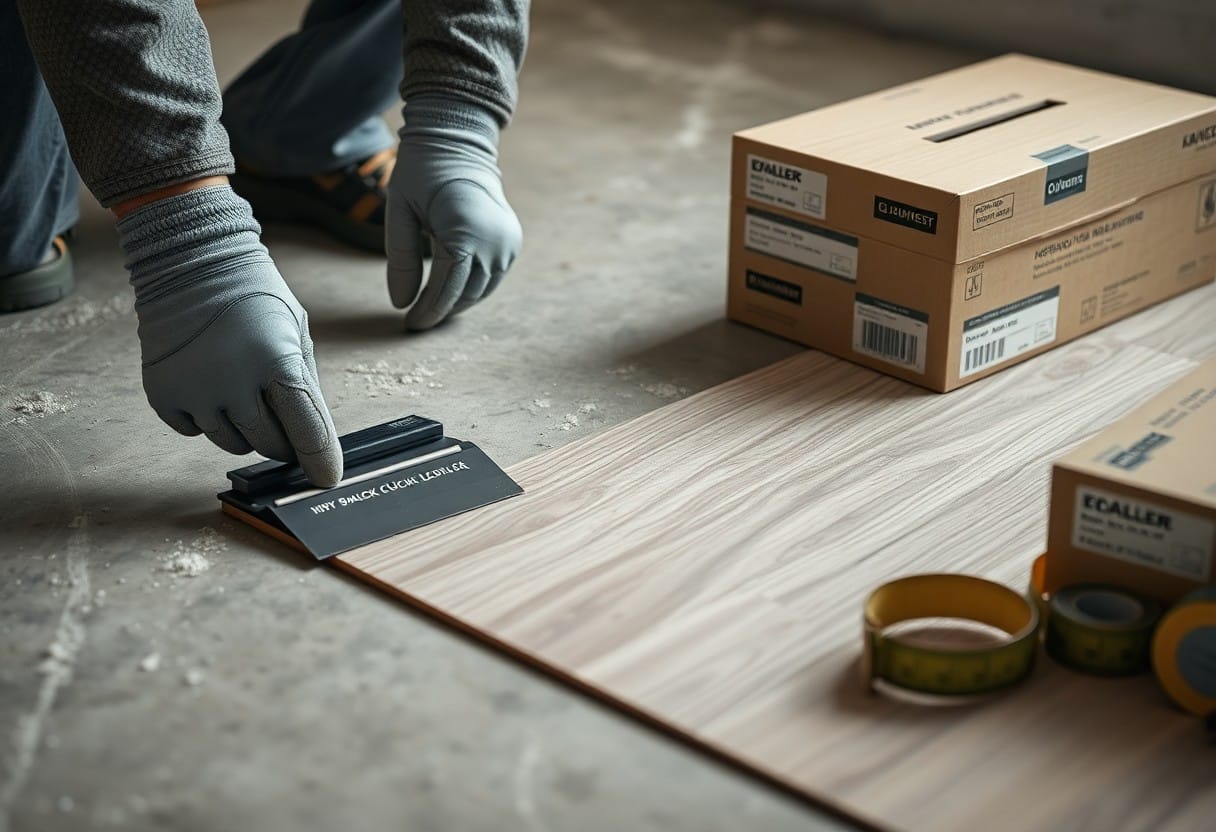
Installation Tips for Optimal Results
- Acclimate flooring 48-72 hours at 18-24°C and 40-60% RH before laying.
- Maintain flatness within 3/16″ over 10′ and stagger end joints 6-12″ to prevent telegraphing.
- Use recommended adhesives for dry-back vinyl (pressure-sensitive or acrylic) and a 1/4″-1/2″ expansion gap for laminate or floating vinyl.
You should test concrete moisture-manufacturers often reference MVER ≤3 lb/1000 sq ft/24 hr or RH limits-and correct high spots with a cementitious patch; align transitions and thresholds early to avoid trimming later. Knowing manufacturer tolerances and local climate effects prevents issues like cupping, adhesive failure, or warranty denial.
Preparation and Underlayment
You must verify subfloor flatness (3/16″ in 10′) and dryness, then install an underlayment suited to your product: 2-3 mm foam or cork for laminate to reduce noise, a 6-8 mil polyethylene vapor barrier over concrete for floating floors, and a cementitious skim coat for uneven concrete before dry-back vinyl. You’ll want to acclimate planks 48-72 hours and keep interior temperature stable during installation.
DIY vs. Professional Installation
If you’re tackling a straightforward 100-500 sq ft room with click-lock laminate or loose-lay vinyl and basic tools, you can often achieve good results; complex patterns, full-spread adhesives, stairs, or jobs over 500 sq ft generally benefit from a pro who brings moisture testing and heavy rollers. You’ll save time and reduce risk of warranty issues by choosing appropriately.
Professionals perform ASTM in-situ RH or MVER tests, select correct trowel notch sizes and adhesives, and use a 100 lb roller for dry-back vinyl to ensure bond; they also handle transitions, door sills, and trim work that commonly trip up DIYers. If a manufacturer requires certified installation for warranty, hiring a contractor who documents tests and follows installation sheets is often the best way to protect your investment and avoid callbacks.
Design Inspiration
Pair 7-inch wide dry-back vinyl planks in matte oak with 12×24 stone-look tile insets to define kitchen islands and traffic paths; specify a 20 mil wear layer in entryways for commercial-level durability. You can lay herringbone vinyl in a 10×12 foyer and wider laminate planks in living spaces to guide sightlines, and use contrasting grout or plank orientation to create visual zones without changing level or base materials.
Modern Aesthetics with Vinyl
Dry-back vinyl gives you ultra-realistic wood and stone visuals with plank widths commonly between 6-9 inches and lengths up to 48 inches. Specify a 12-20 mil wear layer for kitchens or retail and an embossed-in-register surface to reproduce grain depth. Installations allow welded seams and adhesive fixation for watertight runs, so you can create continuous open-plan floors that handle heavy foot traffic and moisture-prone areas.
Classic Looks with Laminate
Laminate delivers hardwood character at a lower cost: typical boards are 8-12 mm thick with AC3 ratings for homes and AC4-AC5 for commercial use. You get click-lock floating installation and often attached underlayment that improves acoustics by 2-3 dB. You’ll find embossed surfaces and micro-bevel edges that replicate oak or hickory textures while keeping upkeep straightforward-damp mopping and spot repairs.
For example, a 1,000 sq ft open-plan remodel often specifies 10 mm AC4 laminate, which two installers can finish in under 48 hours and typically costs 20-40% less than engineered hardwood; warranties commonly span 10-25 years depending on manufacturer. Check water-resistance claims and radiant-heat compatibility for your subfloor, and plan for stocking a few extra planks to match future repairs.
Conclusion
On the whole you can use dry-back vinyl and laminate flooring to follow top design trends-realistic wood and stone visuals, wide-plank formats, mixed-material layering, muted tones, and textured finishes-while enjoying durability, low maintenance, sustainable options, and installation flexibility; these choices let you deliver cohesive, contemporary interiors that reflect your design intent and protect your long-term investment.