Just as you choose flooring to define a room, white oak’s warm grain and versatile tones are elevated by trends like wide-plank formats, matte and wire-brushed finishes, natural stains, and herringbone or chevron layouts; pairing these with neutral palettes, layered textures, and bold trims lets you showcase the wood’s subtle character while maintaining a modern, sustainable aesthetic that complements both minimal and eclectic interiors.
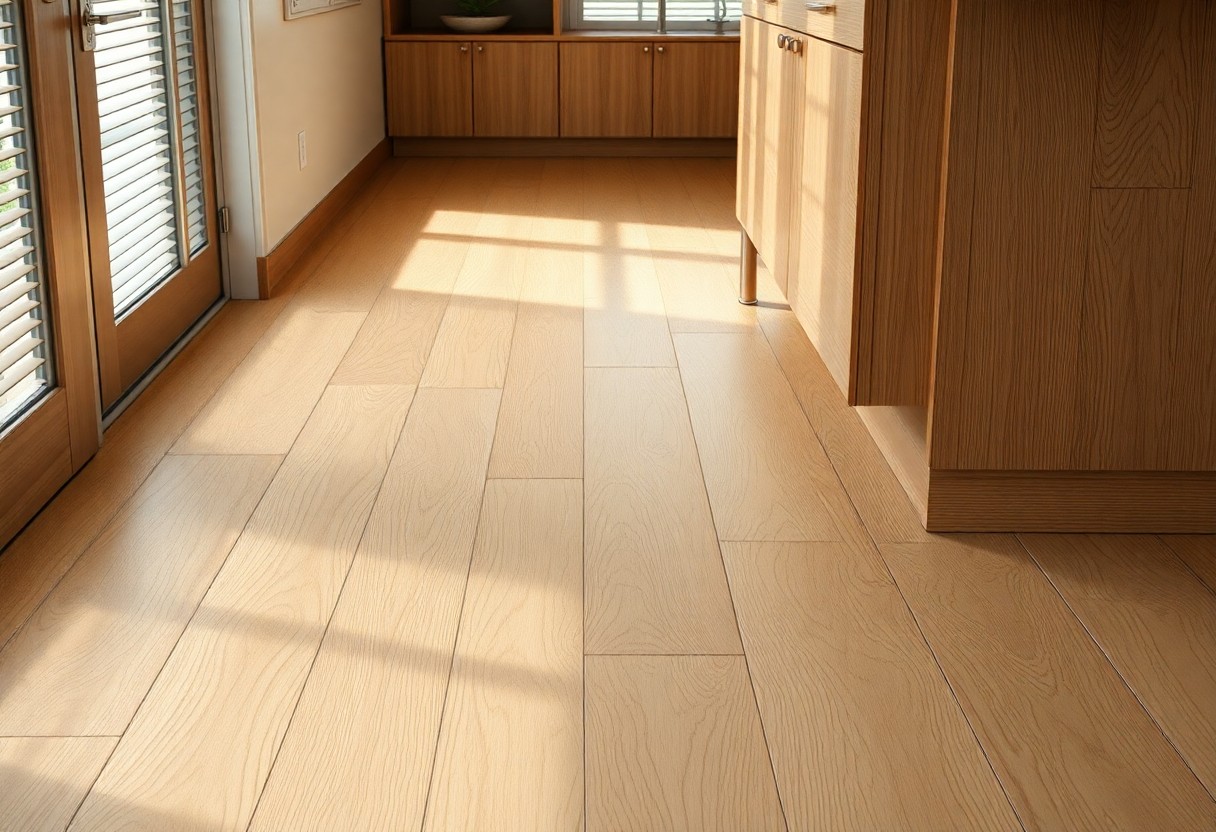
The Timeless Appeal of White Oak Flooring
With its tight cathedral grain and honeyed hues, white oak (Quercus alba) delivers an enduring aesthetic that adapts to both restored period homes and contemporary lofts; you gain the practical benefit of a 1360 lbf Janka hardness and natural tannins that improve moisture resistance compared with many hardwoods, making it well suited for kitchens, hallways, and high-use living areas while preserving long-term value.
Historical Context and Evolution
White oak’s history moves from shipbuilding and cooperage to residential flooring by the 18th-19th centuries, and you can still see that legacy in reclaimed plank projects; its tannin-rich heartwood resisted rot in outdoor applications, while quarter-sawing in the Arts and Crafts era produced stable, decorative boards that set patterns designers revisit today.
Contemporary Applications in Design
Today you’ll often specify wide-plank white oak (6-9″) to unify open-plan spaces, pairing wire-brushed or whitewashed finishes with minimalist palettes; engineered white oak works reliably over radiant heat and in commercial lobbies, and matte oil finishes are chosen to showcase grain while allowing localized repairs without full refinishing.
Designers also extend white oak beyond flooring, so you’ll see matching stair treads, trim, and custom millwork to create cohesive interiors; herringbone and chevron patterns add visual density in entryways, while selecting an engineered floor with a 3-6 mm wear layer or planning for sanding every 10-15 years helps you balance longevity with aesthetic goals.
Color and Finish Trends
You’ll see a lean toward understated palettes and finishes that highlight white oak’s grain: natural, whitewashed, and lightly stained boards dominate, often paired with oil-based or waterborne sealers that preserve warmth. Designers typically keep color shifts under about 10% from raw oak to maintain airiness, and combine pale stains with mixed-width planks or herringbone patterns to enlarge perceived space while showcasing cathedral grain.
Natural and Light Stains
You should prioritize clear or lightly tinted options-whitewash, pickled, or natural oil-if you want grain clarity and warmth. Clear waterborne sealers and products like Rubio Monocoat Natural produce minimal color shift; in open-plan homes, pale stains on 3-5 inch planks maintain continuity and brighten north-facing rooms without masking oak’s texture.
Matte versus Glossy Finishes
You’ll choose matte (≈5-15 gloss units) to mute reflections and conceal fine scratches, while satin to semi-gloss (≈20-60 GU) deepens color and emphasizes grain. Matte finishes-available as oils or UV-cured polyurethanes-reduce glare under pendant lighting; glossy surfaces reveal fingerprints and micro-abrasions sooner, requiring more frequent buffing in high-traffic areas.
For practical selection, match finish to use and upkeep: matte oils are easy to spot-repair and typically need re-oiling every 3-5 years, whereas factory polyurethane with a 2-4 mm wear layer usually allows recoating on a 7-10 year cycle. Also factor lighting-matte minimizes glare from large south-facing windows, while semi-gloss adds depth in rooms lit at warm 2700-3000K-and specify two finish coats plus a durable topcoat when installing for best longevity.
Sustainable Sourcing of White Oak
When you prioritize sustainably sourced white oak (Quercus alba), you favor selective harvesting, regional mills, and reclaimed planks that cut transport emissions and ecological disturbance. Many Appalachian suppliers reforest at ratios of roughly 2-3 seedlings per harvested tree and use reduced-impact logging to protect soils and water. Your floors then deliver longer service lives-commercial white oak commonly endures 50-100 years-lowering lifecycle resource demand versus short-lived alternatives.
Environmental Benefits
Durability lets your white oak store carbon on-site for decades, with mature trees sequestering several tonnes of carbon over their lifetimes. Choosing reclaimed oak can reduce embodied carbon substantially-studies report lifecycle cutbacks up to 60-70% in some reuse scenarios. You also limit indoor emissions by specifying CARB- or low-VOC finishes, and extend material value through refinishing rather than replacement.
Certifications and Standards
Seek FSC, PEFC or SFI certification and a documented chain-of-custody so you know the harvest source and social safeguards. Verify compliance with CARB/TSCA Title VI formaldehyde limits and prefer GREENGUARD or SCS indoor-air quality labels to minimize VOCs; those certifications also help you earn LEED or WELL points for sustainable materials and low-emission interiors.
Check labels and invoices for species (Quercus alba), certified percentages (e.g., FSC 100% vs FSC Mix), mill name and country of harvest to confirm traceability. PEFC and SFI are common for North American supply chains, while FSC is often required for international projects. If you need documentation, request the supplier’s chain-of-custody code and third‑party audit reports-projects that present full traceability tend to pass green building reviews faster and command higher resale value.
Textural Elements in White Oak Flooring
You can manipulate texture to shift a room’s character from sleek to rustic by choosing finishes, plank widths and cut; common plank widths (3″-7″) and thicknesses (3/4″ solid or 3/8″ engineered) change how light and wear read across the surface, while oil finishes and low-sheen polyurethanes preserve natural warmth and enhance tactile appeal.
Wire-Brushed and Hand-Scraped Finishes
Wire-brushed white oak removes softer earlywood fibers to accentuate growth rings and create subtle channels that hide minor scratches, making it ideal for high-traffic kitchens or entryways; hand-scraped boards mimic reclaimed character with irregular tooling marks, and both finishes pair exceptionally well with matte oil finishes to emphasize texture without increasing maintenance.
The Role of Grain Patterns
You should match grain type to design intent: plain-sawn offers bold cathedral patterns for dramatic rooms, while quarter-sawn reveals medullary ray flecks for a refined, linear look; selecting quarter-sawn or narrower planks (3″-5″) highlights those rays and gives a more formal, stable surface.
Grain also affects stain uptake and dimensional stability-white oak’s Janka hardness (~1,360 lbf) provides resilience, but quarter-sawn boards warp and cup less in seasonal humidity swings, and engineered constructions further reduce movement; test a 12″ sample with your chosen stain and finish to confirm how grain character and sheen will perform in your specific light and traffic conditions.
A Harmonious Blend with Other Materials
Pairing white oak with stone, metal, or textiles sharpens its natural grain while expanding functional use: combine 5-7″ rift-sawn planks with honed marble for kitchens, or contrast wire-brushed flooring against concrete countertops to emphasize warmth. You can exploit white oak’s Janka hardness (~1,360 lbf) and tyloses‑rich heartwood to handle high traffic and occasional moisture, so integrating metal legs, porcelain tiles, or glass partitions becomes both aesthetic and practical.
Complementing Interiors with White Oak
When you set white oak alongside cabinetry and soft furnishings, aim for a 60/40 balance-60% oak surfaces to anchor the room, 40% contrasting elements like matte black hardware, deep-blue upholstery, or terracotta accents. Opt for natural or light oil finishes to preserve grain clarity in Scandinavian schemes, while deeper stains or smoked finishes help tie white oak into mid‑century palettes without obscuring the wood’s character.
Mixing Textures and Colors
Start pairing textures by juxtaposing a smooth, lacquered island with wire‑brushed oak floors and a 24×48 porcelain backsplash; the contrast highlights grain and adds tactile interest. You should choose metals-brass for warmth, stainless for cool modernity-to coordinate with stain tone, and use rugs or textiles in 1-3 bold colors to break expanses of wood without overwhelming the palette.
Delve deeper by selecting finishes and materials that tweak perceived temperature: a water‑based clear finish keeps oak pale and contemporary, while oil finishes add amber depth for cozy spaces. Try 2-3 finishes in one plan-matte oak floors, satin cabinetry, high‑sheen fixtures-to create measured contrast; additionally, use tile sizes (12×24 vs 24×48) and plank widths (3″ for traditional, 7″ for modern) deliberately to control rhythm and scale throughout adjacent rooms.
Maintenance and Longevity
Routine maintenance preserves white oak’s tone and structural integrity while extending its service life. You should sweep or vacuum daily, mop with a pH‑neutral cleaner weekly, and keep indoor humidity between 35-55% to limit cupping or gaps. Solid 3/4″ planks can be sanded 4-6 times; engineered boards vary with wear‑layer thickness (2-6 mm). Expect refinishing every 7-15 years depending on traffic and finish type (oil vs. aluminum‑oxide).
Care Tips for White Oak Flooring
You should adopt simple habits to protect finish and grain: use felt pads under furniture, roll up doormats, and blot spills within minutes with a soft cloth; avoid steam mops and oil‑soap cleaners that leave residues, and for engineered floors use a manufacturer‑approved cleaner to protect the wear layer. Knowing area rugs, furniture pads, and routine gentle cleaning can reduce visible wear and delay refinishing.
- Sweep/vacuum daily with a soft‑brush head
- Mop weekly with a pH‑neutral cleaner
- Use waterproof mats at entrances and felt pads under legs
- Refinish solid planks every 7-15 years, engineered per wear‑layer specs
Longevity and Wear Resistance
White oak rates about 1,360 lbf on the Janka scale, offering better dent resistance than red oak (≈1,290 lbf), and its tyloses improve moisture tolerance useful in kitchens and entryways. Engineered boards with a 4-6 mm wear layer can be refinished multiple times, while 3/4″ solid planks permit more sanding cycles. Choose aluminum‑oxide or UV‑cured finishes for high traffic to maximize surface durability.
You can see renovation case studies where original white oak floors in early 20th‑century homes lasted 80-100 years after three to five sandings and recoats; commercial sites using UV‑cured aluminum‑oxide finishes report far fewer repairs. Match plank thickness, finish type, and maintenance schedule to room use-high‑traffic halls benefit from 3/4″ solid or engineered with ≥4 mm wear layer plus commercial aluminum‑oxide coating.
Conclusion
Presently you can embrace minimalist palettes, wide-plank layouts, and matte finishes to showcase white oak’s grain and warmth; combine subtle textures, natural light, and clean lines to amplify its organic elegance. By choosing finishes and patterns that enhance rather than mask the wood, you ensure your spaces feel timeless, adaptable, and refined while allowing the natural character of white oak flooring to anchor your design.