Investment in dry back vinyl flooring gives you durable, water-resistant performance that stands up to high-traffic family life, pets, and spills while replicating wood or stone aesthetics. Its low-maintenance surface and simple repairs reduce downtime and long-term costs, and straightforward installation minimizes disruption to your routine. For busy homes seeking resilience, style, and value, dry back vinyl is an efficient, practical flooring choice.
Understanding Dry Back Vinyl Flooring
Dry back vinyl is a sheet or tile flooring adhered directly to a prepared subfloor with permanent adhesive, giving a low-profile, stable surface. You’ll see wear layers from about 6-30 mil (0.15-0.76 mm) for residential to commercial grades, and total thickness typically between 2-5 mm. Install times are fast-an average 200 sq ft room often takes a pro a few hours to half a day-and expected lifespan ranges from roughly 10 to 25 years depending on traffic and maintenance.
Definition and Composition
You’ll find dry back vinyl made of a clear wear layer over a printed design film, a PVC or blended core, and a backing that bonds to adhesive; some products include fiberglass for dimensional stability. Manufacturers specify wear-layer mils and total thickness, and you should match those numbers to your traffic: 12-20 mil for heavy residential use, 20+ mil for commercial. Adhesives differ by substrate-pressure-sensitive or solvent-based options are common.
Benefits Over Other Flooring Types
Compared with hardwood, tile, or carpet, dry back vinyl delivers waterproof performance, lower upfront material costs, and faster installation, making it practical for busy homes. You can clean most spills with a damp mop in minutes, and high-wear vinyl tolerates pets and kids without surface gouging. Energy-wise, vinyl has better underfoot warmth than tile, and replacement of damaged sections is often quicker and cheaper than full-board or tile replacement.
- Waterproof: ideal for kitchens, laundry rooms, and bathrooms where moisture is frequent.
- Cost-effective: material typically runs lower per sq ft than hardwood or porcelain tile.
- Low-maintenance: routine care is mopping and occasional mild cleaner use.
- Knowing you can repair small areas instead of redoing entire floors reduces long-term expense.
| Feature | Typical Spec / Benefit |
| Wear layer | 6-30 mil (0.15-0.76 mm) – dictates abrasion resistance |
| Total thickness | 2-5 mm – affects feel and durability |
| Water resistance | Waterproof surface; seams and edges matter for full protection |
| Installation time | 200 sq ft room: a few hours to half a day for pros |
| Lifespan | Approximately 10-25 years depending on wear and maintenance |
You should weigh performance details: a 12-20 mil wear layer resists common household traffic while 20+ mil suits constant heavy use. For example, in a family with two children and a dog, choosing a 20 mil product with a robust adhesive cut down repair calls in case of pet accidents. You can also expect lower life-cycle costs versus hardwood because you avoid refinishing; cleaning with pH-neutral products preserves the wear layer longer.
- Better stain resistance than many carpets-most spills lift with mild detergent.
- Faster downtime after installation compared with curing times for large-format tile adhesives.
- Thermal comfort: warmer underfoot than ceramic, reducing heating needs in bare-foot rooms.
- Knowing you can select higher mil wear layers for rooms with heavier daily use prevents premature replacement.
| Comparison Point | Dry Back Vinyl Advantage |
| Initial cost | Generally lower than solid hardwood or porcelain tile |
| Maintenance | Simple mopping vs. refinishing or grout scrubbing |
| Moisture handling | Waterproof surface vs. wood’s susceptibility to swelling |
| Repairability | Replace tiles/patch sections instead of large-scale repairs |
| Installation speed | Quicker install time, less disruption to your household |
Durability and Longevity
Engineered PVC construction and a protective wear layer give dry back vinyl exceptional lifespan; with common wear layers ranging from about 8-20 mil, you can expect 10-25 years of service in a busy household depending on traffic and care. Products specified for commercial use resist dents and staining better than many floating floors, so you avoid frequent replacement in kitchens, entryways, and family rooms.
Resistance to Wear and Tear
Thicker wear layers and quality surface coatings resist abrasion, scuffs, and pet claws, and perform well under rolling loads like office chairs. In practical terms, choosing a 12-20 mil wear layer for high-traffic zones reduces visible wear versus thinner residential grades, and commercial dry back installations routinely meet tougher durability standards used in healthcare and retail.
Maintenance and Care
Daily dry-dusting and weekly damp mopping with a pH-neutral cleaner prevent grit from abrading the surface, while area rugs and felt pads protect high-impact spots. You should avoid steam cleaners and harsh solvents, wipe spills promptly to prevent staining, and limit prolonged UV exposure to reduce fading.
For longer-term upkeep, follow manufacturer maintenance schedules: use approved neutral cleaners, perform restorative cleaning every few months, and consider occasional professional deep cleaning for heavy soils. Applying a manufacturer-recommended maintenance finish or light buffing every 12-36 months can refresh appearance without stripping the sheet, extending service life and preserving warranty compliance.
Aesthetic Appeal
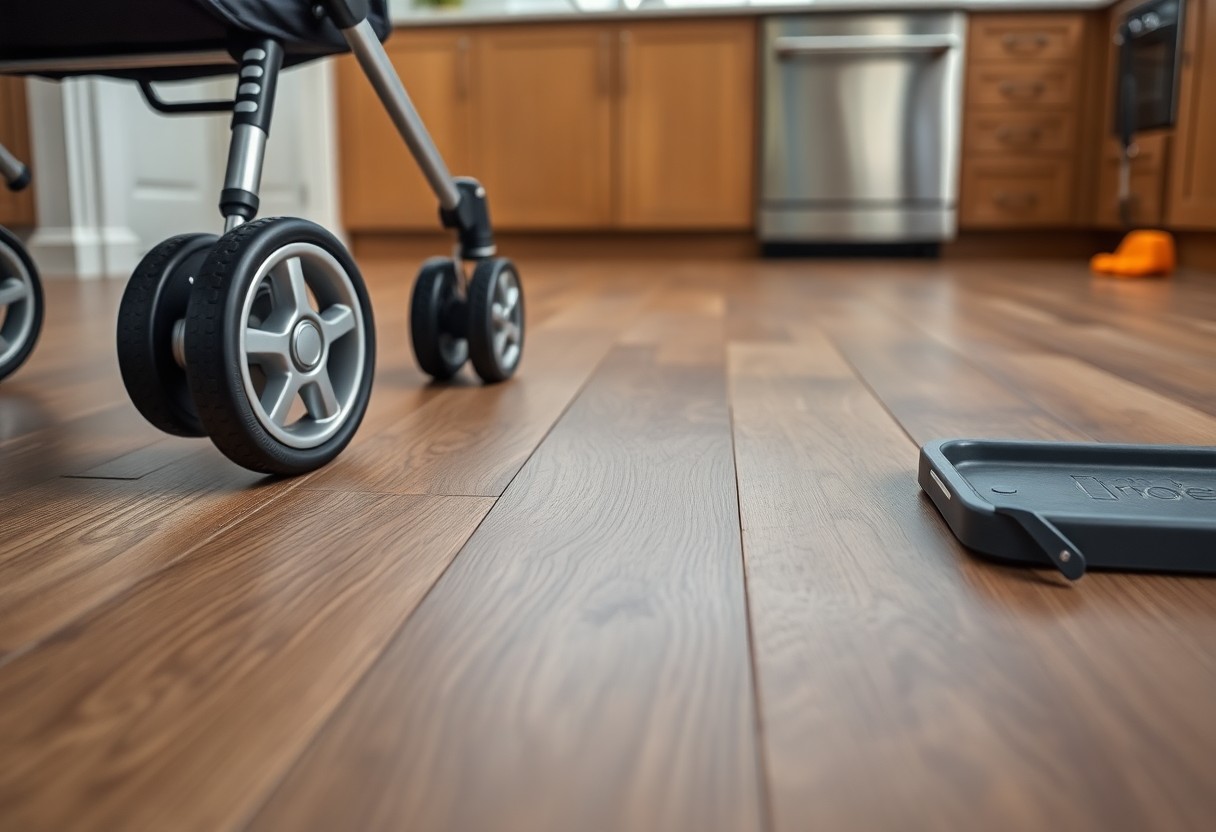
Dry back vinyl elevates your home’s look by offering seamless, large-format installations that mimic premium surfaces without the upkeep; you can choose plank widths from narrow 4-6 inches to wide 7-9 inches and tiles in common sizes like 12×24 or 18×36 inches for scaled realism. Manufacturers such as Armstrong and Tarkett include collections aimed at busy households, letting your kitchen or entryway achieve a designer finish while staying durable and easy to maintain.
Design Options
You’ll find hundreds of patterns and dozens of colorways, from traditional oak and walnut to bold geometric and encaustic-tile looks, with embossing and gloss levels from matte to semi-gloss. Many lines offer registered embossing that aligns texture to the printed image, plus bevel and straight-edge choices so you can create herringbone, staggered planks, or perfectly grouted tile layouts to match your aesthetic and traffic needs.
Mimicking Natural Materials
Advanced printing and embossing let you replicate white oak, rift-cut maple, Carrara marble, and honed slate with convincing grain, veining, and color depth; high-resolution photographic layers-often printed at industry-standard resolutions-combined with registered embossing produce texture that reads like the real material underfoot. You benefit from the look of natural stone or hardwood while keeping water resistance and easier cleanup for active rooms.
For added realism, manufacturers use techniques such as embossed-in-register texture, micro-bevels, and layered color stacks to capture pores, knots, and mineral streaks; grout-simulating seams and 1-2 mm grout gaps mimic tile installs without the porosity. That means you can specify a Carrara-look sheet in a bathroom or a hand-scraped oak appearance in a mudroom and still expect stain resistance, easier maintenance, and lower upfront installation costs compared with natural materials.
Cost-Effectiveness
Dry-back vinyl gives you strong bang for your buck: materials typically run $1.50-$4 per sq ft and professional installation about $1-$3, so installed totals usually sit between $2.50-$7 per sq ft. Compared with hardwood ($8-$15 installed) or ceramic tile ($5-$15), you can save roughly $5,000-$11,000 on a 1,000 sq ft remodel, and lower maintenance further reduces your lifecycle expenses.
Initial Investment vs. Long-Term Savings
When you weigh upfront cost against lifespan, the permanent adhesive minimizes movement and premature replacement, often extending usable life to 10-20 years with normal care. Annual maintenance for you typically runs under $50, and avoiding a single water-related replacement that can cost $1,500-$5,000 shows how quickly long-term savings offset a modest initial investment.
Value Addition to Your Home
Swapping dated floors for well-installed dry-back vinyl improves your home’s presentation and buyer appeal; real estate pros often rank flooring among the top renovation priorities. At $3-$5 per sq ft installed for many projects, you deliver modern aesthetics and durable performance without hardwood’s price tag, which can help you secure faster offers and stronger negotiating power.
You can also highlight transferable manufacturer warranties-many residential lines offer 10-20 year coverage-alongside water resistance and low‑VOC options to reassure buyers and appraisers. By choosing realistic wood- or stone-look patterns and ensuring a seamless professional install, you preserve appraisal value while keeping renovation costs predictable and attractive to potential buyers.
Installation Process
Start by verifying subfloor flatness and moisture: dry back vinyl performs best on a surface within 3/16-inch variation over 10 feet and with moisture levels meeting the adhesive manufacturer’s limits. You’ll apply adhesive to the prepared floor, lay the sheet or tiles, roll them with a 100 lb roller for full transfer, trim seams precisely, and allow initial set-typically 24-48 hours-before light foot traffic and up to 72 hours for furniture.
Preparing Your Space
You should strip baseboards and thresholds, fill low spots and seams with a cementitious patch, and vacuum and solvent-clean to remove oils and dust. Maintain room temperature and humidity at normal living conditions for at least 48 hours so the material and adhesive acclimate. Also plan layout and seam placement to minimize visible joints in high-traffic zones like kitchens and hallways.
DIY vs. Professional Installation
You can install dry back vinyl yourself in a simple 150-300 sq ft room in 2-3 days if you have basic flooring experience; otherwise a professional crew typically completes the same area in one day and provides a workmanship warranty. Expect a pro to bring specialized tools and to price labor and materials competitively-get at least three quotes and check references.
You’ll need the right tools and technique to avoid common failures: a manufacturer‑specified notch trowel, a 100 lb roller to ensure adhesive transfer, seam sealer and a sharp straightedge for trimming. If you lack experience with trowel coverage rates or roller passes you risk air pockets and edge lift, which are often why homeowners ultimately call in a pro.
Environmental Considerations
You should evaluate environmental impact across sourcing, lifespan, and end-of-life: many dry-back vinyl products use recycled PET backings and offer a 15-25 year residential lifespan, which lowers replacement frequency and embodied carbon compared with short-lived coverings. Check for EPDs or Declare labels to compare cradle-to-grave impacts, and prioritize lines that publish recycled-content percentages and take-back or recycling programs to reduce landfill waste.
Sustainability of Materials
You can favor collections that specify recycled content-commonly 10-40% in backings or core layers-and reclaimed post-industrial PVC reuse, which diverts waste. Manufacturers increasingly replace foam backs with recycled PET from bottles, and some brands document reductions in virgin material via environmental product declarations (EPDs). Choosing longer-wearing dry-back sheets or tiles stretches service life, improving per-year environmental performance versus alternatives replaced every 8-12 years.
Indoor Air Quality Benefits
You’ll notice IAQ gains when you select low‑emission products and adhesives; many dry-back systems are available with FloorScore or GREENGUARD certification and low‑VOC adhesive options that meet regional standards such as SCAQMD rules. Because sheet vinyl doesn’t trap dust the way carpet does, occupants often see fewer allergen complaints, and proper ventilation during install typically reduces initial off‑gassing within 48-72 hours.
You should also control installation variables to protect sensitive occupants: use water‑based, low‑VOC adhesives, keep temperatures moderate to limit VOC release, and ventilate continuously for the first 48-72 hours. If someone in the home has asthma or chemical sensitivity, run a HEPA air purifier and avoid solvent‑based seam sealers; pairing certified products with these practices minimizes short‑term VOC peaks and keeps indoor air stable over the long term.
To wrap up
Now you can rely on dry back vinyl flooring to withstand heavy foot traffic while requiring minimal upkeep; its dense construction and durable wear layer resist scratches and stains, and its waterproof performance protects against spills and pet accidents. Installation and repairs are straightforward, keeping disruption and long-term costs low, so you get stylish, comfortable floors that hold up over years in busy homes and deliver strong value for your investment.