Oak species vary: white oak has a tighter grain and superior moisture resistance, while red oak offers warmer tones and an open grain; you should weigh appearance, durability, and cost when choosing.
Botanical and Structural Profiles
White oak tends to have tighter growth rings and tyloses that block vessels, while red oak shows more open pores and pronounced rays, so you’ll notice differences in color, stability, and how each species responds to stains and moisture when selecting flooring.
Species Classification and Growth Patterns
Taxonomy separates white oak (Quercus sect. Quercus) from red oak (Quercus sect. Lobatae), so you can expect distinct leaf shapes, acorn traits, and growth habits that influence board width, grain consistency, and overall flooring character.
Cellular Density and Pore Structure
Density and pore arrangement differ: white oak’s tyloses reduce vessel connectivity and improve moisture resistance for your floor, while red oak’s open pores increase permeability and change how finishes absorb.
Microscopically, you’ll see white oak’s vessels occluded by tyloses-cellular extensions that seal capillaries and limit liquid flow-so water and stains sit on the surface longer and the wood behaves better in humid areas. Red oak lacks those occlusions, leaving an interconnected pore network that increases finish absorption, requires stronger sealing, and can lead you to use specific adhesives and primers to avoid blotching and dimensional movement.
Aesthetic and Visual Distinctions
Visuals can guide your choice: white oak offers softer, creamy neutrals while red oak leans warmer with a pinkish cast; you’ll notice how finish, plank width, and lighting change each species’ mood in a space.
Color Undertones and Natural Variation
Tones in white oak lean neutral-beige, while red oak tends toward warm pink and amber; you should test samples in your lighting to see how stains and grain shift undertones.
Grain Patterns and Ray Flecking
Patterns differ visibly: white oak shows pronounced ray flecking and straighter grain, while red oak exhibits bolder, more open grain; you’ll perceive texture and movement from across the room.
Examining ray flecks up close reveals that white oak’s medullary rays create a shimmering, cathedral-like effect ideal for wide planks, and you can enhance or soften these features through cut orientation and finishing choices.
Durability and Performance Metrics
Durability is comparable: you’ll find white oak slightly more water-tolerant and marginally harder, while red oak offers dependable toughness; you can expect similar longevity when you choose the right finish and maintain the floor regularly.
Janka Hardness Scale Comparison
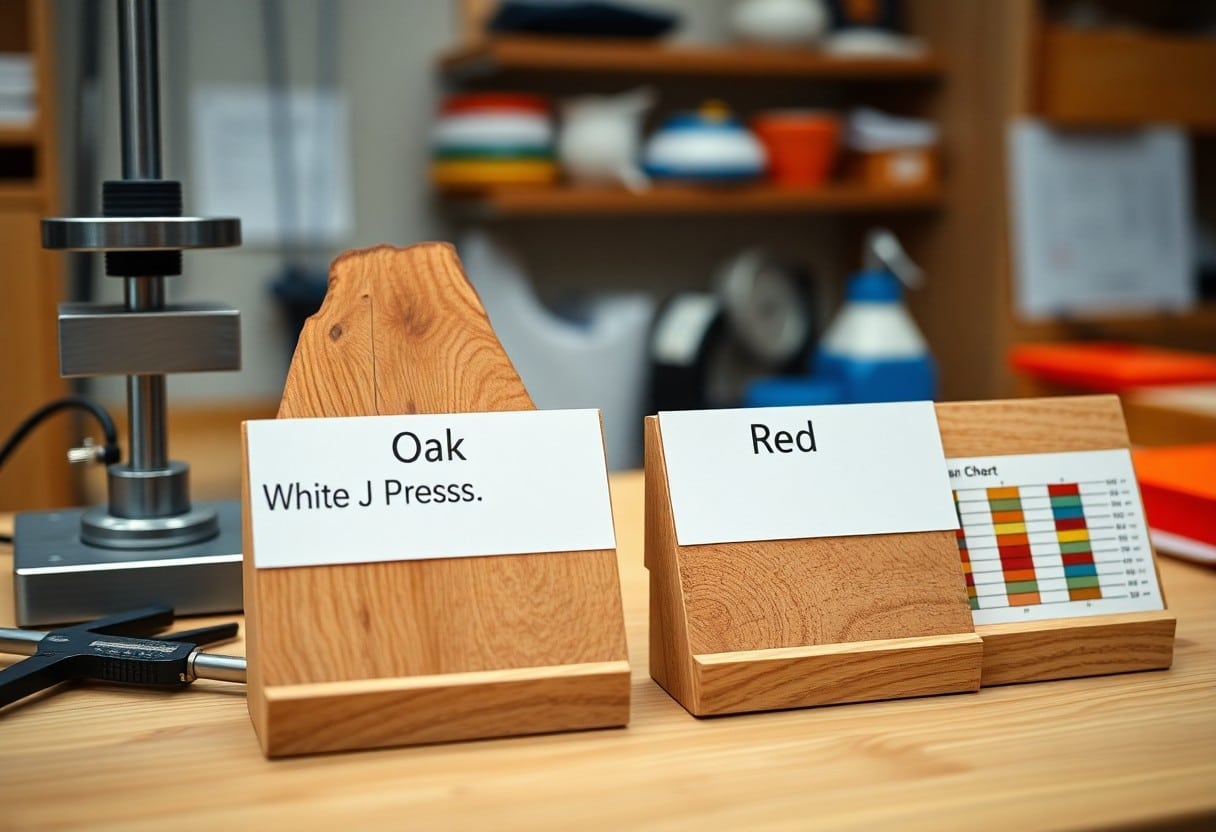
Janka tests show white oak at about 1360 lbf and red oak near 1290 lbf, so you’ll notice a small edge in dent resistance with white oak, though finish and installation matter more in daily use.
White Oak vs Red Oak – Janka Hardness
| White Oak | ~1360 lbf – slightly higher dent resistance |
| Red Oak | ~1290 lbf – marginally softer, more prone to dents |
Resistance to Wear and Impact
Wear varies by grain and finish: you can expect white oak’s tighter grain to hide scratches better, while red oak reveals wear more clearly; both resist impact well when sealed with quality coatings.
You should assess your household: high-traffic rooms, pet claws, and moving furniture increase wear, so choose a tougher finish or thicker wear layer-white oak handles moisture-related issues better, reducing cupping and stain risks over time.
Moisture Stability and Rot Resistance
White oak’s closed-cell structure and tannin-rich heartwood resist rot better than red oak, so you can expect longer performance in damp basements or entryways with proper finishing and maintenance.
The Role of Tyloses in Liquid Impermeability
Tyloses formed in white oak plug vessels and make the wood much less liquid-permeable, so you benefit from reduced water uptake and fewer stain or decay problems compared with red oak.
Performance in High-Humidity Environments
Red oak’s open grain allows more moisture exchange, so you should avoid installing it in bathrooms or unconditioned porches unless you control humidity and seal the floor thoroughly.
When you expose white oak to persistent humidity, its tyloses slow moisture penetration but seasonal movement still occurs, so allow acclimation and expansion gaps; for red oak, you should expect faster swelling, tighter finishing schedules, and the need for moisture barriers plus frequent humidity monitoring to prevent cupping and warping.
Finishing and Staining Versatility
You can adapt both white and red oak to a wide range of stains and finishes; white oak’s tighter grain produces cleaner, more consistent tones, while red oak’s open grain accepts stain unevenly-so you may need fillers or adjusted techniques to achieve uniform results.
Tannin Content and Chemical Reactivity
Tannins in red oak are often higher, so you may see dark blotching or chemical reactions with certain water-based finishes; test small samples and apply sealers or conditioners to prevent uneven discoloration.
Achieving Modern vs. Traditional Aesthetics
Choosing white oak lets you achieve cool, modern looks with gray or whitewashed stains, while red oak’s warm, pronounced grain favors classic, honeyed finishes; test samples in room light to see how each responds to your preferred topcoat.
Consider how undertones and grain interact with your décor: you can accentuate a contemporary palette by using water-based, low-yellowing finishes on white oak and a thin gray or white stain, while red oak often brings pink or amber undertones that amplify warm, traditional schemes. You should sample stains on full-width boards, test grain filling to reduce blotchiness, and choose satin or matte sheens to keep a modern feel.
Market Availability and Cost Analysis
Availability of white oak and red oak varies by region; you’ll often find red oak more abundant and slightly cheaper, while white oak commands premium pricing for coastal-grade applications and limited supply.
Sourcing Trends and Pricing Drivers
Regional mills and import patterns shape availability, so you should expect price swings when exports rise, harvests decline, or fuel and shipping costs increase.
Grading Standards and Board Dimensions
Grades determine visual character and price, and you’ll pay more for Select/Clear; common grades show knots and color variation that lower cost but raise sorting requirements.
Board grading follows industry labels-Select, #1 Common, #2 Common-so you can balance appearance against budget; widths, lengths and thickness (solid vs engineered) influence per-square-foot cost, installation waste and long-term resale appeal.
Conclusion
Ultimately you should choose white oak for neutral tones and improved moisture resistance, and red oak for warmer color and pronounced grain; consider hardness, finish options, and budget to decide which fits your home’s style and maintenance needs.