Just a few consistent habits will keep your white oak flooring looking pristine: you should sweep or vacuum daily to remove grit, wipe spills immediately with a damp cloth, use pH-neutral cleaners and soft mops, place mats at entries, and trim pet nails to prevent scratches; schedule gentle refinishing when wear becomes visible to preserve the finish and grain.
Understanding White Oak Flooring
White oak (Quercus alba) gives you a hard, stable floor with a Janka rating near 1,360 lbf, outperforming many common hardwoods. Its heartwood spans light tan to deep brown with an occasional olive cast, and natural tyloses make it less permeable to moisture-helpful in kitchens and lower-level spaces when installed correctly. You should match grade and plank width to the room’s traffic and the aesthetic you want.
Characteristics of White Oak
Its straight to slightly wavy grain and coarse texture create pronounced patterns that take stain evenly, while density provides good scratch resistance in busy areas like hallways. You’ll find typical plank widths from 3″ to 7″, excellent dimensional stability compared with softer species, and natural tannins that contribute to warm, long-lasting tones.
Benefits of White Oak Flooring
Durability and ease of maintenance make white oak a smart long-term choice: finished correctly it can serve 30-50 years, and solid boards usually tolerate 3-4 refinishes. You’ll gain design flexibility-stain or wire-brush for different looks-and consistent resale appeal across many markets, so initial investment often pays off over time.
When deciding between solid and engineered, check wear-layer thickness: 3-6 mm on engineered planks allows one to two sandings, while 2 mm typically means replacement rather than refinishing. You can install by nail, glue, or floating methods; proper acclimation keeps wider boards (up to 7-8″) stable. For example, a 2018 condo using 5″ engineered white oak with a 4 mm wear layer was refinished after seven years with minimal sanding, illustrating how refinishing reduces long-term replacement costs.
Daily Care for White Oak Floors
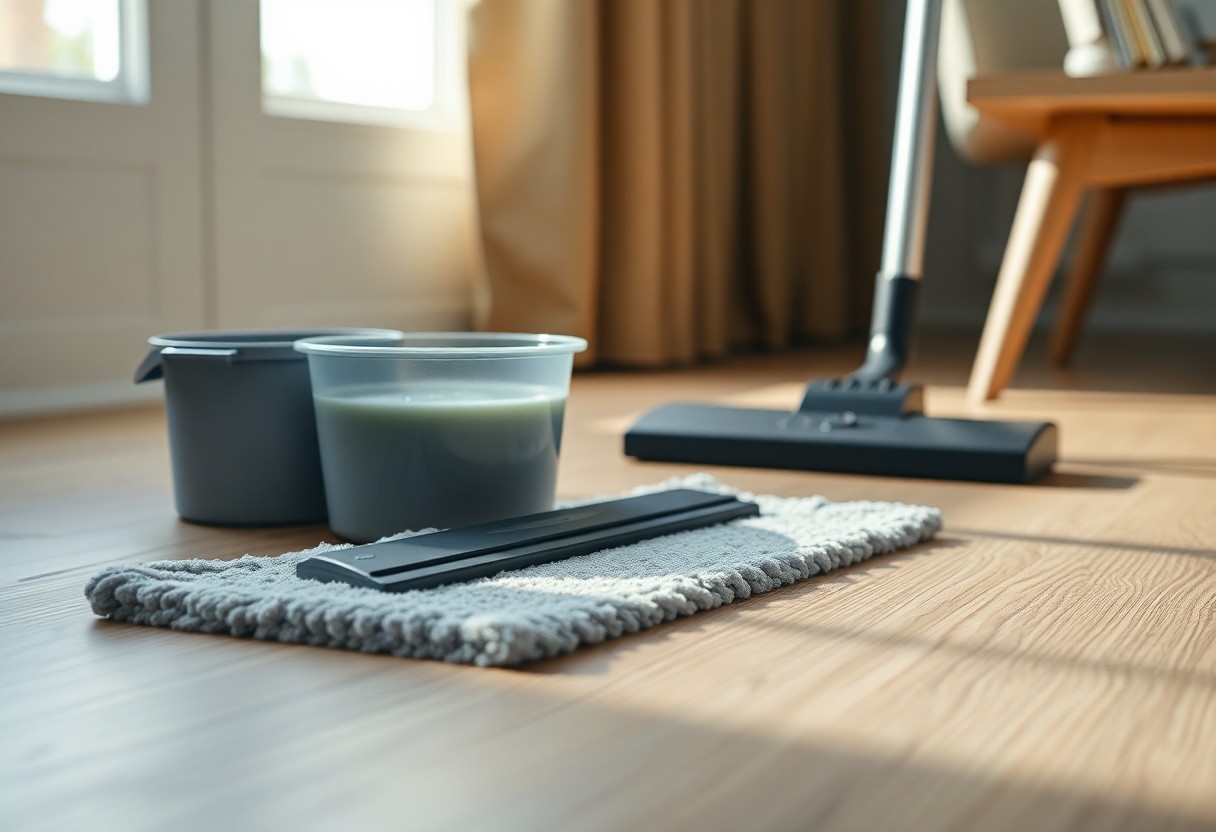
Keep a short daily habit to prevent grit and spills from degrading your finish: sweep or vacuum high-traffic zones 1-2 times daily and spot-wipe spills within 15 minutes to avoid staining or cupping. Use a microfiber dust mop for quick passes and inspect entryways for tracked-in sand after outdoor activities. For a 500 sq ft room, a focused 5-10 minute sweep each morning prevents buildup that would otherwise accelerate micro-scratching and shorten the time between refinishes.
Dusting and Sweeping
Use a microfiber dust mop or a soft-bristle broom to lift dirt without abrading the surface; vacuum only with a hardwood-safe setting and a felt or brush attachment-never the beater bar. Dust daily in busy areas or every other day elsewhere. Spend roughly 1-2 minutes per 100 sq ft to remove grit that acts like sandpaper, and pay special attention to thresholds and under furniture where particles collect.
Recommended Cleaning Products
Choose pH-neutral, water-based hardwood cleaners labeled for urethane or aluminum-oxide finishes-brands installers often recommend include Bona and Black Diamond. Avoid oil soaps, abrasive powders, ammonia, bleach, or full-strength vinegar, which can dull or strip finishes. Apply cleaner with a damp, well-wrung microfiber mop; never flood the floor and follow label dilution and usage instructions for streak-free results.
Look for products with a pH around 6-8 and low-VOC formulations; many manufacturers specify approved cleaners in their care guides and using uncertified products can void finish warranties. Test any new cleaner on a 1 ft² inconspicuous spot for 24 hours before whole-room use. For waxed or hard-wax-oiled surfaces use specialty formulations, while polyurethane or UV-cured floors respond best to commercial, ready-to-use wood cleaners applied sparingly and without added oils or silicones.
Deep Cleaning Techniques
For heavy soil buildup, plan a deep clean every 6-12 months or after renovation and pet-heavy periods; you’ll remove embedded grit and restore finish clarity by combining a thorough vacuum with a low-moisture cleaning method and targeted spot treatments, always testing products on a 2″×2″ inconspicuous area first and avoiding steam cleaners that can force moisture into seams and cause cupping.
When and How to Deep Clean
You should deep clean when high-traffic areas look dull or when sand and grit resist routine sweeping; start by vacuuming with a floor-brush attachment, follow by a microfiber mop dampened (not soaked) with a pH-neutral cleaner, work along the grain in 3-4 foot sections, and dry each section with a clean microfiber cloth or fan within 30-60 minutes to prevent water penetration.
DIY Cleaning Solutions
Use a gentle homemade mix: combine 1-2 teaspoons of pH-neutral Castile soap per gallon of warm water for general deep cleaning, or for stubborn spots apply a 50:50 solution of isopropyl alcohol and water sparingly on a soft cloth, then rinse and dry immediately; always test first and avoid acidic or abrasive mixtures that can dull polyurethane finishes.
When making solutions, label containers and mix only what you’ll use that day; for textured or wire-brushed white oak, use a soft nylon scrub brush on a spot rather than aggressive scrubbing across the whole floor. If your floor has an oil or wax finish, switch to products formulated for that finish and consider professional cleaning every 2-4 years to refresh seals and prevent premature refinishing costs.
Preventing Damage to White Oak
To limit wear and warping, maintain indoor relative humidity between 35% and 55% and temperatures around 60-80°F using a hygrometer and humidifier/dehumidifier as needed. You should trim pet nails, enforce no-shoe zones in busy rooms, and remove grit with weekly vacuuming in high-traffic areas. Fit furniture with felt pads and replace them every 6-12 months, and always lift heavy pieces instead of dragging to avoid gouges-white oak’s Janka rating (~1,360 lbf) resists dents but doesn’t eliminate surface vulnerability.
Use of Area Rugs and Mats
Place low-pile rugs and non-staining pads at all exterior doors and high-traffic interior zones; a 24-36 inch entry mat captures grit before it abrades finish. You should avoid rubber- or PVC-backed mats that trap moisture and can discolor wood, and choose felt or cork-backed pads 1/8″-1/4″ thick for grip and airflow. Vacuum rugs weekly, rotate them monthly, and select washable or easy-to-replace runners for hallways to keep wear concentrated on replaceable surfaces.
Managing Foot Traffic and Furniture
Control traffic by installing 2-3 ft-wide runners in hallways and placing rugs at sinks and entries to protect common pathways. You should fit furniture feet with 1-2 in felt pads rated for the load, inspect and replace pads every 6-12 months, and use wide coasters under heavy pieces to distribute weight. Always lift rather than slide furnishings, since dragging creates scratches and edge damage that require costly repairs.
Swap hard plastic casters for soft polyurethane or rubber wheels labeled safe for hardwood, aiming for caster ratings around 50-150 lb per wheel based on total chair weight. You should use a chair mat at desks, employ a dolly or plywood sheets when moving appliances to spread loads, trim pet nails to roughly 2 mm to reduce claw scoring, and clear embedded grit from pads to prevent ongoing abrasion.
Maintaining Finish and Luster
To keep your white oak’s finish and luster, recoat high-traffic rooms every 3-5 years and plan a full refinish every 10-15 years based on wear; oil finishes penetrate and mellow color while polyurethane forms a protective film with higher abrasion resistance. You should use pH-neutral cleaners, avoid steam mops, maintain 35-55% indoor humidity, rotate area rugs, and use felt pads under furniture to minimize abrasion and preserve sheen.
Reapplying Finish
When reapplying finish you should scuff-sand with 220-320 grit to ensure adhesion, vacuum and wipe with a tack cloth, then apply thin, even coats-expect 2-3 coats for water-based poly (dry 2-4 hours between coats) and 2 coats for oil-based (dry 24-48 hours); lightly sand between coats and keep temperature and humidity stable to prevent bubbles and uneven curing.
Tips for Polishing
Polishing can restore sheen without full refinishing: use a manufacturer-approved polishing compound for your finish type, perform the work every 6-12 months in active areas, test a small section first, and use a low-speed buffer under 300 rpm or hand-buff with microfiber to avoid heat buildup and burnishing.
- You should use microfiber cloths and non-abrasive pads to avoid scratching the surface.
- You should apply polish sparingly in thin, even layers to prevent cloudy buildup.
- Knowing how to match product to your finish (oil vs. polyurethane) and testing on a hidden strip prevents compatibility issues.
For more effective polishing, you can use 3M white non-abrasive pads or manufacturer-recommended microfiber bonnets, keep buffer speed below 300 rpm, and move the machine at roughly 3-4 feet per pass; expect to cover about 100-200 sq ft per hour depending on obstacles, allow polish to dry 20-30 minutes, then buff to blend sheen evenly.
- You should test polish compatibility on an unseen strip before treating the entire room.
- You should ventilate the space and maintain 35-55% humidity while drying to avoid streaks and premature tackiness.
- Knowing that over-polishing can build unwanted layers, you should alternate polishing with gentle sanding or screening every few years.
Dealing with Scratches and Dents
Assess each mark by depth and area: hairline finish scratches can be hidden with a stain marker or paste wax; shallow dents often respond to the steam-and-iron method (damp cloth, medium iron for 10-20 seconds repeated) that raises oak fibers; gouges exposing raw wood typically need filler or board replacement. If damage spans more than a couple of boards or reaches bare wood, plan for a more involved repair to maintain finish continuity.
Minor Repairs at Home
You can tackle small nicks with wax repair sticks, blending with a plastic scraper and buffing; for color correction use water-based stain markers that match your floor tone, testing on an inconspicuous plank first. For dents under 1/16″ use the steam method then lightly sand with 220-grit and apply a thin coat of finish like a water-based polyurethane. Keep tools like a utility knife, filler, and fine sandpaper on hand.
When to Call a Professional
Hire a pro when damage covers multiple boards, exceeds roughly 3 sq ft, or includes deep gouges, finish failure, or structural shifting; jobs that require full sanding, board replacement, or stain-matching across a large area are best left to contractors. Professionals have dust-control sanders and can choose appropriate grit progression (60-100 grit rough, 120-150 finish) to avoid over-sanding your white oak.
Expect a pro to provide a written estimate, timeline (a 500 sq ft job often takes 2-3 days), and finish options-oil-based poly for durability or water-based for lower VOCs; typical refinishing runs $3-7 per sq ft depending on region and complexity. Ask about warranty, references, and whether they use color-matching techniques and plate sanding to preserve board profile while blending repairs seamlessly.
Summing up
The best way to preserve your white oak floors is to adopt consistent, gentle care: sweep or vacuum debris daily, wipe spills immediately, mop with a damp microfiber and a pH-neutral cleaner, protect high-traffic areas with rugs and furniture pads, control indoor humidity, and refinish or recoat as wear appears to maintain finish and grain-these steps keep your floors beautiful for years.