Flooring in white oak gives you durable, attractive grain and adaptable finishes that suit diverse styles, helping you choose a long-lasting surface that withstands daily wear, maintains value, and enhances home appeal for years.
Exceptional Durability and Hardness
White oak’s dense grain and high hardness give you long-lasting flooring that withstands heavy foot traffic and furniture, minimizing dents and scuffs and extending the life of your investment.
Analyzing Janka Scale Performance
Janka scores for white oak sit above many common species, helping you assess dent resistance and how it compares to red oak or maple when choosing a durable option.
Resistance to Daily Wear and Impact
Daily activity-children, pets, and moving furniture-tests floors, and white oak often absorbs impacts with fewer visible marks, so you enjoy a cleaner look with regular upkeep.
You can further increase white oak’s resistance by choosing thicker planks and factory finishes like aluminum-oxide or multi-coat urethane, which reduce scratches and delay refinishing; add felt pads under furniture, area rugs in high-traffic zones, and regular grit removal to limit abrasion, and you’ll preserve appearance and performance for years with only occasional refinishing.
Aesthetic Versatility Across Design Styles
White oak adapts to virtually any interior, giving you options from rustic charm to sleek minimalism while harmonizing with furniture and finishes.
Characteristic Grain Patterns and Linear Texture
Distinctive grain and linear texture provide visual movement that you can use to emphasize sightlines, tuck furniture, or lengthen room proportions.
Neutral Undertones for Modern and Traditional Palettes
Neutral undertones let you pair the flooring with warm woods, cool metals, or painted trim, giving your home both timeless and contemporary options.
You can shift the mood by choosing finishes-matte sheens mute color while clear oil deepens grain-so neutral undertones become a flexible canvas for bolder rugs, art, or cabinetry.
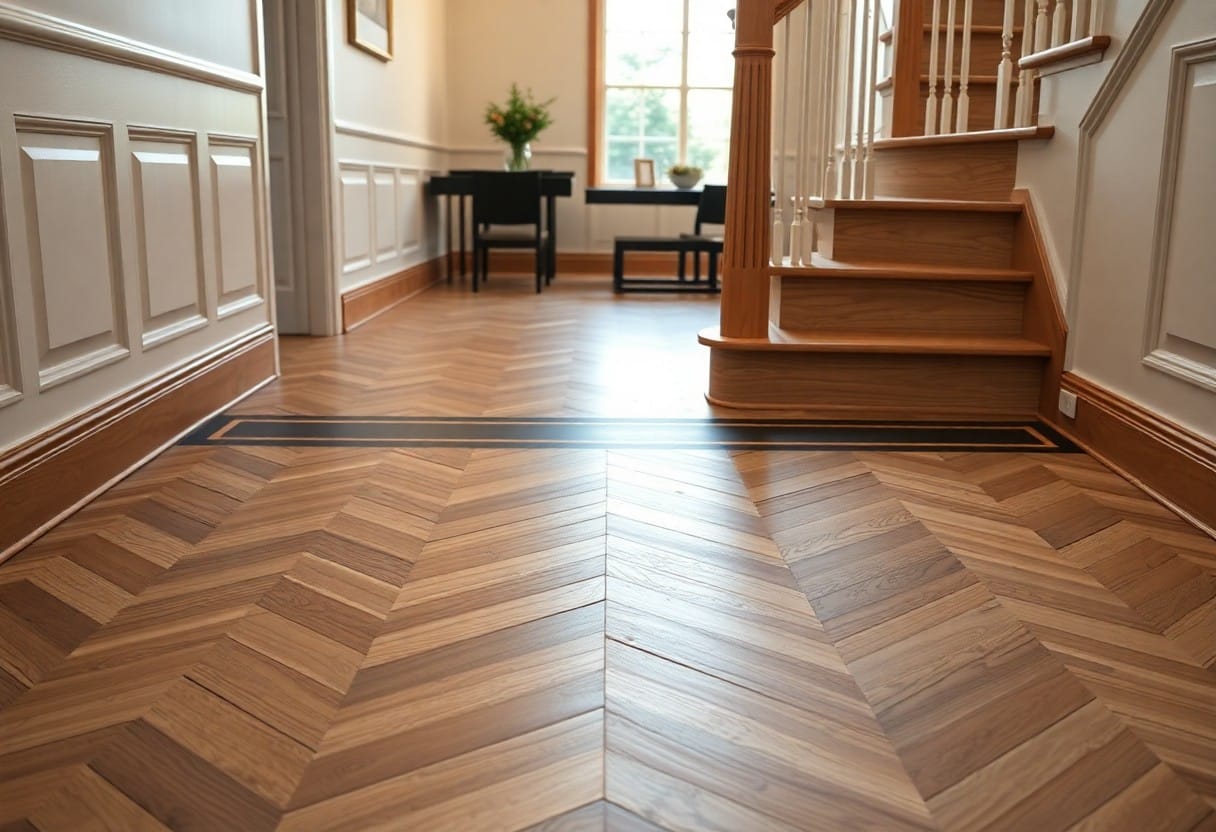
Superior Customization and Finishing Options
White oak’s open grain and stable tannins let you choose plank widths, stains, and sheens to match any interior, while finishes from matte oil to high-gloss lacquer give you precise control over color and durability.
Receptivity to Stains and Reactive Treatments
Stains and reactive treatments penetrate white oak’s pores so you can create deep, even colors or lively, reactive patinas; results remain predictable across batches, simplifying matching and future repairs.
Achieving High-End Cerused and Wire-Brushed Effects
Cerused and wire-brushed finishes lift and highlight the grain so you can achieve a textured, designer aesthetic that feels both historic and contemporary without sacrificing wear resistance.
Applying wire-brushing removes softer earlywood to deepen texture, while cerusing fills the open pores with white or tinted fillers so you can contrast the grain; adjusting brush intensity, filler shade, and topcoat produces anything from subtle refinement to bold, high-contrast statements, and proper sealing preserves the effect for years in high-traffic areas.
Natural Resistance to Moisture and Decay
White oak’s high tannin content and tight grain resist moisture and fungal decay, so you can place it in kitchens, basements, or entryways with confidence and enjoy floors that age gracefully with minimal rot or staining.
The Biological Advantage of Closed-Cell Structure
You benefit from white oak’s closed-cell structure, which limits water absorption and slows decay organisms, reducing warping and preserving finish integrity over years of household use.
Performance Stability in Diverse Climates
Climate swings will affect many woods, but white oak’s dimensional stability helps you maintain flat, tight boards across humid summers and dry winters, reducing gaps and cupping.
Oak’s ring-porous anatomy and dense latewood resist seasonal swelling and shrinkage, so you’ll face fewer adjustments, enjoy longer-lasting finishes, and find installations more predictable in basements, sunrooms, or homes spanning varied humidity zones.
Sustainability and Environmental Stewardship
Choosing white oak for your floors means selecting a durable, repairable material that limits replacements and landfill waste, while supporting sustainable practices that match your aesthetic and environmental priorities.
Sourcing from Managed North American Forests
Sourced from certified North American forests, white oak you install often comes from planned harvest cycles and replanting programs, so you can prefer wood with traceable chain-of-custody and lower ecological impact.
Carbon Sequestration and Lifecycle Longevity
Oak stores carbon for decades in its structure, so when you keep and maintain oak floors you extend that carbon sink and reduce whole-home emissions over time.
When you choose white oak that is responsibly sourced and refinished instead of replaced, you lock significant carbon into your home, lower embodied emissions associated with new flooring, and maximize long-term environmental benefits; selecting certified supply, local milling, and diligent upkeep ensures the carbon advantage persists across generations.
Investment Value and Market Desirability
Investing in white oak flooring typically boosts perceived home value, so you recover more of your cost at sale; its enduring appeal and durable character keep it attractive to buyers across styles and price points.
Impact on Property Appraisal and Resale
Appraisers often assign higher marks to homes with white oak floors, so you can expect stronger appraisal values and quicker resale in competitive markets where buyers prioritize authentic, long-lasting hardwood finishes.
Historical Consistency vs. Passing Trends
History proves white oak adapts across eras, so you avoid a look that dates quickly; its classic grain and stain versatility let you update interiors without replacing core flooring.
You gain flexibility with white oak because it sands and refinishes well, letting you refresh floors to match evolving tastes rather than replace them; buyers recognize lifespan and provenance, so your investment stays relevant across modern, traditional, and transitional interiors, supporting sustained demand and practical upkeep that protects resale potential.
Summing up
The natural grain and durability of white oak give you a long-lasting, versatile floor that complements varied styles, resists wear, and boosts resale value while requiring straightforward care.