Just follow proven routines and smart techniques to keep your white oak floors beautiful and functional for decades. In this guide you’ll learn optimal cleaning methods, the right products to use, how to protect high-traffic areas, when to refinish, humidity management, and simple repair tips so you can prevent common damage and extend the life and appearance of your floors.
Types of White Oak Floors
You’ll encounter five common styles: solid, engineered, whitewashed, wire-brushed, and reclaimed-each varying in installation method, finish, board width, and moisture tolerance. Solid typically comes as 3/4″ (19mm) and can be sanded 5-6 times; engineered has a 2-6 mm wear layer over plywood/HDF and suits basements or radiant heat. Board width and finish determine appearance and maintenance frequency. Recognizing which matches your subfloor, humidity control, and lifestyle will simplify long-term care.
- Solid White Oak
- Engineered White Oak
- Whitewashed White Oak
- Wire-brushed White Oak
- Reclaimed White Oak
| Solid White Oak | 3/4″ (19mm), nail/staple install, sands 5-6 times, best for above-grade |
| Engineered White Oak | Plywood/HDF core, wear layer 2-6 mm, stable for basements and radiant heat |
| Whitewashed White Oak | Light stain/white oil, highlights grain, common in coastal and modern looks |
| Wire-brushed White Oak | Textured surface hides wear, preferred in high-traffic areas |
| Reclaimed White Oak | Aged patina and varied widths, often pre-finished and requires careful selection |
Solid White Oak
You rely on 3/4″ (19mm) solid planks for traditional installs; they’re nailed or stapled to joists, tolerate standard indoor RH of about 35-55%, and can be refinished 5-6 times over decades. Wider boards show more grain variation, and narrower strips offer greater stability in seasonal climates. Choose solid when you want maximum sanding life and a long-term investment in your home’s value.
Engineered White Oak
You’ll find engineered planks in common thicknesses of 3/8″-1/2″ (9-12mm) with wear layers from 2-6 mm; they can be floated, glued, or stapled and work well over concrete, below grade, or with in-floor radiant heat. Their multi-ply core reduces cupping and seasonal movement, making them a versatile option when you need dimensional stability without sacrificing authentic oak appearance.
For purchase decisions, use wear-layer thickness as a guide: 2 mm typically allows one light sand, 3-4 mm supports one to two refinishes, and 4-6 mm approaches the longevity of solid oak. Acclimate boards 48-72 hours on-site, follow adhesive and manufacturer specs for radiant installations, and consider certifications like FSC for sustainability; finishes vary-UV-cured poly gives higher initial durability, while oil finishes simplify spot repairs.
Factors Affecting Floor Longevity
Multiple variables determine how long your white oak floors look and perform: species hardness, finish quality, installation, maintenance routines, and indoor environment all interact. White oak’s Janka hardness (~1,360 lbf) gives a solid wear baseline, yet a low‑VOC, high‑solids finish and steady humidity control often outweigh species differences. You can extend life substantially with targeted care. The most influential factors are finish type, indoor humidity control, and traffic patterns.
- Wood species and plank thickness
- Finish type and application quality
- Installation methods and acclimation
- Environmental humidity and temperature
- Foot traffic, pets, and furniture use
- Maintenance frequency and product choice
Environmental Conditions
Seasonal humidity swings drive most dimensional changes; keep indoor relative humidity between 30% and 50% and temperature around 60-75°F to limit gaps, cupping, and cupping recovery. You should aim for monthly RH shifts under 10-15 percentage points-use a whole‑house humidifier, dehumidifier, or portable units as needed. Monitoring with hygrometers in two or more rooms gives actionable data to prevent long‑term movement damage.
Foot Traffic and Usage
High‑traffic zones like entryways, kitchens, and hallways can receive 1,000+ steps per day and abrade finishes much faster than low‑use rooms; kitchens typically show 2-3× more wear than bedrooms. You should deploy runners, interior mats, and felt pads, and opt for abrasion‑resistant finishes (aluminum‑oxide or high‑solids polyurethane) to slow wear. Expect refinishing intervals of roughly 3-7 years in busy areas versus 8-15 years elsewhere.
Digging deeper, concentrated wear-pet claws, high heels, rolling chairs-creates micro‑scratches that coalesce into visible wear paths; you should trim pet nails, replace felt pads every 6-12 months, and rotate rugs to spread wear. For very busy households or light commercial use choose tougher factory‑applied finishes or plan frequent recoat cycles; most solid white oak floors tolerate 2-4 sandings over their life depending on original board thickness and finish system.
Maintenance Tips for White Oak Floors
You keep your white oak looking its best by following specific, repeatable habits: sweep daily with a microfiber or dust mop, vacuum 2-3 times weekly with a soft‑bristle floor attachment, and damp‑mop monthly using a pH‑neutral hardwood cleaner diluted per label.
- Use felt pads and replace every 6-12 months
- Maintain indoor RH at 35-55%
- Avoid steam mops and rubber‑backed mats
Perceiving how small, regular actions-like swapping pads and tracking humidity-can add years to the finish.
Daily Cleaning Techniques
You should dry‑mop every day with a microfiber pad to remove grit that scratches; vacuum high‑traffic areas 2-3 times weekly using a soft floor attachment. Wipe spills within 5 minutes with a slightly damp cloth, then dry immediately. Skip steam mops and harsh chemicals; instead spot‑clean with a manufacturer‑approved, pH‑neutral solution and use felt protectors on furniture legs to prevent dents.
Seasonal Maintenance Tasks
Each season you need to inspect finish wear, check for gaps along boards after winter contraction, and verify indoor RH stays between 35-55% with a humidifier or dehumidifier. Deep‑clean and buff high‑traffic zones every 6-12 months, and plan a professional screen‑and‑recoat every 3-7 years based on household activity-pets and kids push shorter cycles.
For deeper seasonal care, move furniture and vacuum thoroughly, then damp‑mop; professionals will screen with a 120-180 grit pad and apply two thin coats of water‑based finish, allowing 24-48 hours cure between coats. If you have a busy family or multiple pets, expect recoats near year three; lighter use often stretches to five or seven years, reducing long‑term sanding needs.
Step-by-Step Cleaning and Care Guide
| Step | Action & Frequency |
|---|---|
| Daily/Weekly | Sweep or vacuum 2-3× weekly with a soft-brush attachment; wipe spills within 24 hours to prevent staining. |
| Monthly | Microfiber mop with a pH-neutral hardwood cleaner diluted per label (commonly around 1:10); work with the grain and avoid excess water. |
| As-needed | Use felt pads, entry mats, and humidity control (35-55%) to minimize wear, gapping, and cupping. |
| Annual/Long-term | Deep clean or professional screen-and-coat every 12-18 months in high-traffic areas; expect full sanding/refinishing every 15-30 years depending on wear. |
Basic Cleaning Procedures
Sweep or vacuum 2-3 times weekly using a soft-brush attachment and wipe spills within 24 hours to limit staining; you should mop monthly with a microfiber pad and a pH-neutral hardwood cleaner diluted per label (often near 1:10). Work with the grain, avoid steam cleaners and abrasive tools, and lift scuffs gently with a damp cloth plus a few drops of cleaner.
Deep Cleaning Methods
Plan deep cleaning every 12-18 months or when the finish appears uniformly dull; you can use a concentrated hardwood cleaner with microfiber pads for restorative cleaning or engage a professional for screening and recoating. Test any product in a 2×2 inch hidden spot first, avoid standing water, and dry floors within 30-60 minutes to protect the wood.
For a thorough DIY deep clean, clear the room, vacuum with a HEPA-filtered unit, and spot-treat sticky areas using a manufacturer-recommended cleaner. Apply the cleaner in small sections, agitating gently with a microfiber pad and following with a dry microfiber to remove residue. If gloss loss or finish wear is widespread, consider a professional screen-and-coat: the contractor abrades the existing finish, removes dust, and applies thin topcoats-curing typically takes 24-48 hours-and this service commonly extends surface life by several years, often performed every 3-7 years in busy households.
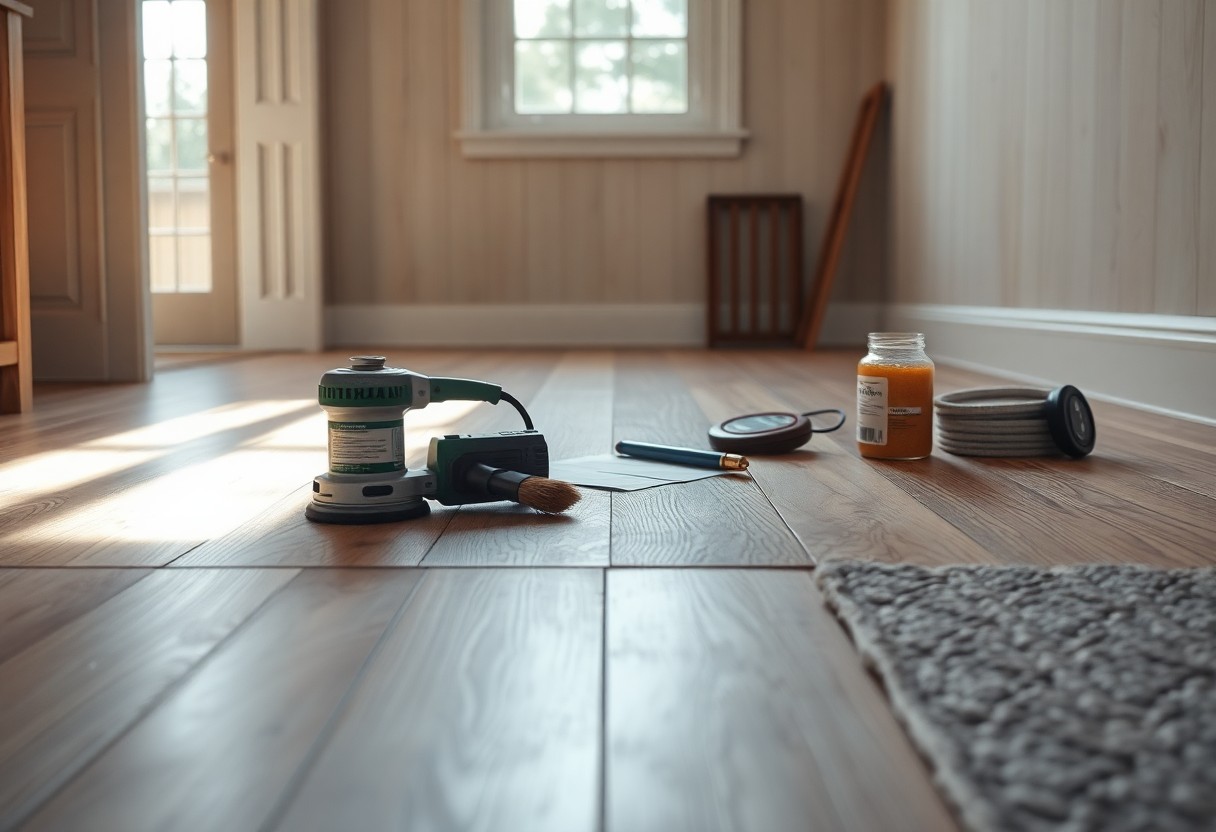
Pros and Cons of White Oak Flooring
| Pros | Cons |
|---|---|
| High hardness (Janka ~1,360 lbf) for long wear | Sensitive to moisture-can cup, crown, or swell |
| Distinct, attractive grain that takes stain evenly | Color shifts with UV exposure; can amber over time |
| Refinable multiple times (solid hardwood often 5-7 sandings) | Refinishing is disruptive and requires downtime |
| Available in wide plank and engineered formats | Wider planks exaggerate seasonal movement if not acclimated |
| Good resale value and widely available domestically | Usually pricier than lower-end engineered options |
| Performs well in high-traffic residential areas | Visible scratches from pets and heavy furniture without protection |
Advantages of Using White Oak
You get a durable floor with a Janka hardness around 1,360 lbf that handles family traffic, pets, and commercial light use; it accepts stains uniformly, is available in 3-7″ plank widths and engineered constructions, and when properly installed and refinished 5-7 times over decades can outlast many flooring choices, delivering strong resale value and design flexibility.
Disadvantages to Consider
You must manage moisture and acclimation-white oak will expand and contract with humidity, so avoid using unfinished solid boards below grade and plan for a 3-7 day acclimation; installation and refinishing costs (solid often $6-$12/sq ft installed) plus periodic maintenance are trade-offs to factor into your budget.
In practice, keep indoor relative humidity between about 30-50% and target wood moisture content near 6-9% to minimize cupping or gaps; expect refinishing every 7-12 years depending on finish and traffic, use felt pads, mats, or commercial-grade finishes in high-wear areas, and choose engineered oak for basements or high-moisture climates to reduce seasonal issues.

Frequently Asked Questions
You’ll get direct answers on lifespan, refinishing, and daily care: white oak floors commonly last 50+ years with routine maintenance, many homeowners refinish every 7-15 years depending on traffic, and you should keep indoor relative humidity around 35-55% to minimize gapping and cupping. Use a soft-brush vacuum 2-3× weekly, felt pads under furniture, and UV-filtering window film to slow color changes from sunlight.
Common Concerns About White Oak
You may worry about hardness or moisture: white oak rates about 1,360 lbf on the Janka scale, so it resists dents better than many species, and its tyloses make it more water‑resistant than red oak-but it’s not waterproof. Choose 3/4″ solid for multiple sandings (5-7 times) or engineered with a 3-4 mm wear layer for below‑grade installations where stability matters.
Maintenance Myths Debunked
You don’t need wax on modern finished floors-polyurethane or aluminum‑oxide finishes perform better; water‑based poly dries faster and yellows less than oil‑based, while oil‑based can amber and sometimes last longer between refinishes. Also, using pH‑neutral cleaners and microfiber mops prevents buildup; harsh detergents and steam can damage finishes and the wood beneath.
For more detail, you can often recoat a surface‑level worn finish without full sanding-spot repairs and screening extend intervals between full refinishes. Solid 3/4″ planks allow 5-7 sandings, whereas engineered floors with a 3 mm veneer usually permit 1-3. In high‑traffic zones, mats and routine maintenance can double the time between refinishes, saving significant cost over decades.

To wrap up
On the whole you can extend the life of your white oak floors by following consistent cleaning, immediate spill management, humidity control, protective pads, and gentle, manufacturer-approved products; schedule periodic inspections and refinishing when the finish wears, and address scratches and moisture issues promptly. With routine care and sensible traffic management, your floors will remain attractive and durable for decades.