Just weigh SPC vinyl’s durability, recyclability challenges, and lower VOC options against laminate’s wood-fiber composition, easier recycling in some programs, and shorter lifespan to decide which aligns with your environmental priorities.
Material Composition and Resource Extraction
Material choices affect extraction impacts and embodied carbon, so you should weigh virgin polymer demand, mining for mineral fillers, and timber sourcing when comparing SPC vinyl and laminate.
Stone Plastic Composite (SPC) and Synthetic Polymers
SPC often relies on PVC and mineral fillers sourced from fossil fuels, so you should consider its lower renewable content and recycling limitations despite long lifespan.
Wood Fiber Content and High-Density Fiberboard (HDF)
HDF cores contain compressed wood fibers, so you should check whether laminate uses recycled fiber, certified timber, and low-emission resins to reduce deforestation and indoor air concerns.
Consider that HDF quality and environmental impact hinge on fiber source and adhesives: you can prefer panels made from post-industrial or post-consumer fiber, certified FSC/PEFC timber, and low- or no-added-formaldehyde resins to lower embodied emissions and VOCs, while accounting for limited recyclability, moisture sensitivity, and end-of-life disposal challenges.
Manufacturing Processes and Carbon Footprint
Manufacturing of SPC vinyl and laminate creates different emissions profiles; you should compare raw material extraction, resin-intensive steps in vinyl and heat-pressing for laminate, plus the local energy mix that drives lifecycle carbon footprints.
Energy Intensity in Vinyl Production
Vinyl production uses high-temperature extrusion and calendering, so you’ll typically see greater energy intensity per square meter than laminate, especially if production relies on coal or natural gas-based electricity.
Resin Usage and Chemical Waste Management
Resin in SPC usually contains PVC and plasticizers, increasing chemical handling and hazardous waste streams you must address, whereas laminate’s resins are lower in volume but still involve adhesives and surface coatings.
Handling of PVC and additives requires strict controls: you should look for manufacturers with wastewater treatment, solvent recovery, phthalate-free formulations, and documented end-of-life strategies because recycling PVC mixes and incineration can release dioxins and persistent pollutants if unmanaged.
Indoor Air Quality and VOC Emissions
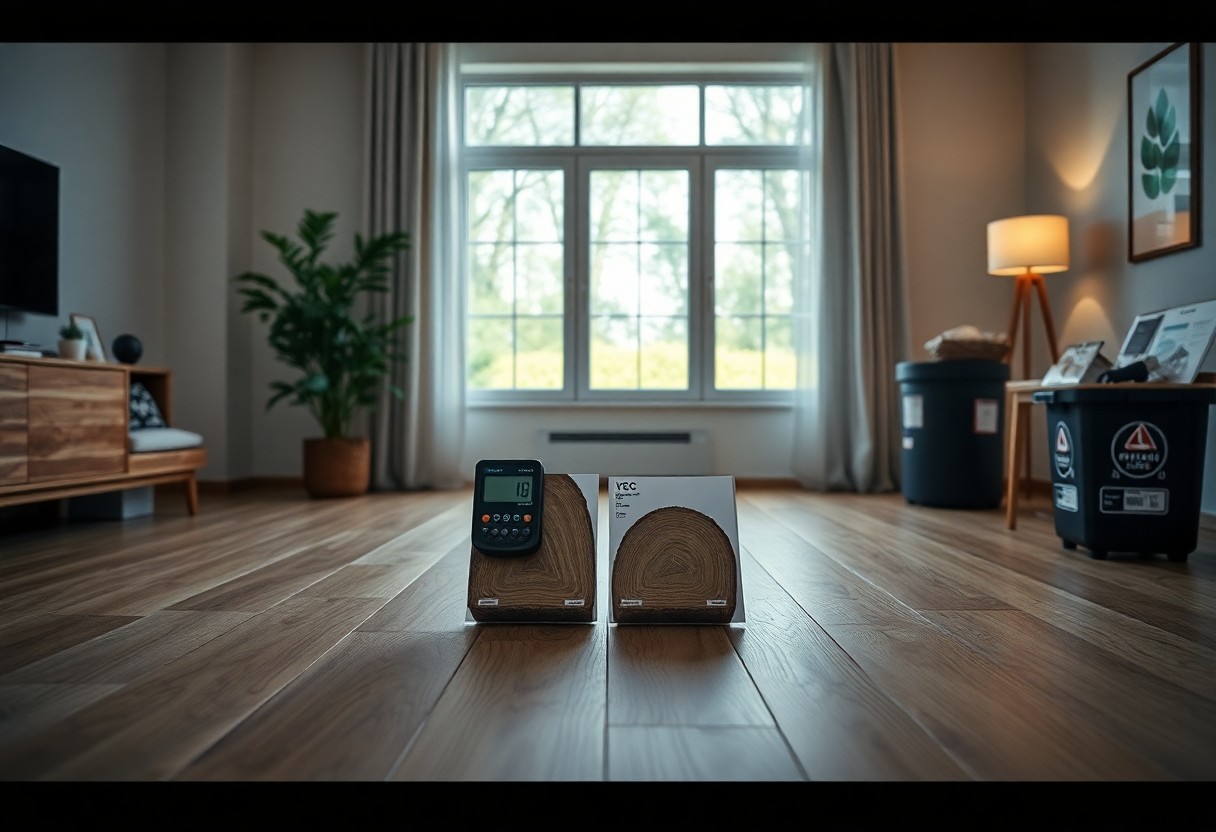
Indoor air quality depends on VOC emissions from flooring and adhesives, so you should review manufacturer tests, low-emitting certifications like FloorScore or GREENGUARD, and ventilation plans before choosing SPC vinyl or laminate.
Phthalates and Off-gassing in SPC Vinyl
SPC vinyl may contain phthalates unless labeled phthalate-free; you should check for phthalate disclosures and recent third-party testing, since off-gassing can increase short-term indoor exposure after installation.
Formaldehyde Standards in Laminate Flooring
Laminate flooring often uses composite cores that can emit formaldehyde; you should prefer products meeting CARB Phase 2 or TSCA Title VI and look for FloorScore or GREENGUARD certification to limit emissions.
Standards such as CARB Phase 2 and TSCA Title VI require testing and set formaldehyde limits, so you should verify declarations of conformity, independent lab reports, and look for E1, FloorScore, or GREENGUARD marks; selecting low-emitting cores or water-based adhesives lowers your long-term exposure.
Product Durability and Lifecycle Assessment
Lifecycle assessment compares SPC and laminate across production emissions, expected lifespan, and end-of-life options; you weigh durability against recyclability and embodied carbon to decide which flooring fits your sustainability goals.
Water Resistance and Longevity of SPC
SPC offers superior water resistance compared with laminate, so you can install it in moisture-prone areas and expect longer service life without swelling or warping, reducing early replacement impacts.
Impact of Maintenance and Replacement Frequency
You cut environmental impact by choosing materials that need less maintenance and fewer replacements, since frequent repairs and early replacement raise embodied carbon and waste streams.
Frequent repairs multiply the footprint: you will incur additional material, transport, and disposal emissions when replacing short-lived laminate compared with low-maintenance SPC, and tracking average years to failure plus local recycling options helps you minimize total environmental cost.
End-of-Life Disposal and Recyclability
Disposal of SPC and laminate differs: you should expect most SPC to be landfilled because fused plastic layers resist separation, while laminate’s wood-based cores may be incinerated for energy or recycled where facilities exist; check local recycling programs and manufacturer take-back options to reduce your waste.
Challenges in Recycling Multi-layer Synthetics
Complexity of SPC’s multi-layer construction means you often cannot separate PVC, stabilizers, and mineral fillers, so recycling streams reject it and mechanical recycling yields low-value outputs; seek chemical-recycling pilots or vendor take-back schemes when you can.
Biodegradability of Wood-Based Core Materials
Wood-based laminate cores can biodegrade under industrial composting or break down in landfill over decades, but adhesives and coatings often hinder decomposition, so you should verify end-of-life pathways before choosing products.
Consider that wood-based cores like HDF contain adhesives, waxes, and wear-layer polymers that greatly slow microbial breakdown; you can improve outcomes by selecting products with water-based or bio-based resins, minimal surface coatings, or documented reuse and reclamation programs, and by asking suppliers for certifications and clear end-of-life options for your installations.
Environmental Certifications and Standards
Many buyers use certifications to compare SPC vinyl and laminate, helping you judge emissions, recycled content, and sourcing when assessing environmental impact.
Understanding FloorScore and GREENGUARD Gold
FloorScore and GREENGUARD Gold test indoor VOC emissions; you should prefer floors certified to these standards to reduce off-gassing and improve indoor air quality.
FSC and PEFC Sourcing for Laminate
FSC and PEFC confirm that wood in laminate comes from responsibly managed forests, giving you assurance about chain of custody and sustainable harvesting practices.
When evaluating labels, check chain-of-custody numbers, percentage claims, and whether certification covers both the fiberboard core and decorative papers; you should note FSC has stricter global governance while PEFC has broader regional uptake, so verify supplier documentation to ensure the sourcing meets your sustainability expectations.
Final Words
Upon reflecting, you should weigh lifespan, material composition, and recyclability: SPC vinyl offers superior durability and water resistance that can reduce replacement frequency, but contains PVC and mineral fillers that complicate recycling; laminate often uses wood fibers and simpler manufacturing, making it potentially greener if sourced from recycled wood and low‑VOC binders, so your choice depends on priorities.