Vinyl selection, acclimation, subfloor preparation, layout and cutting, click-lock or adhesive installation, transitions and trims, and final inspection are covered so you can approach your SPC vinyl project confidently; this guide gives step-by-step methods, necessary tools, and troubleshooting tips to ensure a durable, seamless finish you’ll be proud to show.
Understanding SPC Vinyl Flooring
You’ll rely on SPC’s stone-plastic composite core (roughly 60-80% limestone filler) for exceptional dimensional stability; typical plank thickness ranges from 3-8 mm while wear layers run 0.3-0.7 mm (6-28 mil equivalents), and lifespans vary from about 10 to 25 years depending on traffic and wear-layer thickness. You can install it as click-lock, glue-down, or loose-lay, and it performs well in kitchens and basements because it’s fully waterproof and resists swelling and warping under normal household moisture conditions.
Types of SPC Vinyl Flooring
You should pick the format that matches your subfloor, traffic patterns, and installation skill: click-lock for DIY floating installs, glue-down for commercial permanence, loose-lay for rentals, and tile formats for selective repairs and design variety.
- Click-lock planks – floating, DIY-friendly.
- Glue-down planks – permanent, smooth subfloors required.
- Loose-lay sheets/tiles – quick replace, minimal adhesive.
- Tiles – grout-look options and easy patch repairs.
- Thou can choose based on your budget, traffic level, and subfloor condition.
| Type | Typical Specs / Best Use |
|---|---|
| Click-lock planks | 4-8 mm thickness; floating installs for homes and light commercial areas |
| Glue-down planks | 2.5-5 mm; stable, permanent installs for high-traffic commercial spaces |
| Loose-lay | 3-6 mm; rentals or areas needing fast replacement, minimal adhesive |
| Tiles | 3-5 mm; design flexibility, easy spot repairs and replacements |
Pros and Cons of SPC Vinyl Flooring
You’ll appreciate SPC for being waterproof, dimensionally stable, and suitable for heavy foot traffic-many residential planks use a 0.3-0.5 mm wear layer while commercial grades hit 0.5 mm (20 mil) or more-yet it can feel firmer underfoot, may dent under concentrated heavy loads, and seams can be more visible than seamless sheet goods.
Pros and Cons
| Pros | Cons |
|---|---|
| Waterproof core – ideal for kitchens, baths, basements | Firm surface – less cushioning than cork or padded LVT |
| High dimensional stability – minimal expansion/gap issues | May dent under very heavy concentrated loads (appliances) |
| Durable wear layers available (0.3-0.7 mm) | Weight can complicate lifting and leveling for DIYers |
| Wide range of visuals, realistic wood and stone looks | Visible seams on some installations compared with sheet vinyl |
| Low maintenance – sweep and damp-mop | Not as easily refinished as real wood |
You should weigh manufacturer-specified wear-layer thickness (residential commonly 6-12 mil/0.15-0.3 mm; commercial often 20 mil/0.5 mm) and warranty terms: higher mil ratings correlate with 10-20+ year expected life under normal use, while softer subfloor edges or inadequate underlayment can magnify denting-consult product data sheets for load ratings and approved underfloor heating compatibility.
Pros and Cons – Additional Detail
| Pro (Detail) | Con (Mitigation) |
|---|---|
| Waterproof core – can be installed in basements and moisture-prone rooms | Firm feel – add 1-2 mm acoustic underlayment for comfort where manufacturer permits |
| Stable dimensions – less than 0.5% expansion typically | Potential dents – use protective pads under heavy furniture and distribute loads |
| Durable wear layers – choose 20 mil for light commercial use | Seams visible – tighter installation tolerances and proper expansion gaps reduce prominence |
| Low maintenance – regular sweeping, pH-neutral cleaners | Repairability – keep spare planks for patching; full plank replacement is best |
| Wide visual range – 20+ styles common per product line | Weight – plan for two-person handling on large deliveries |
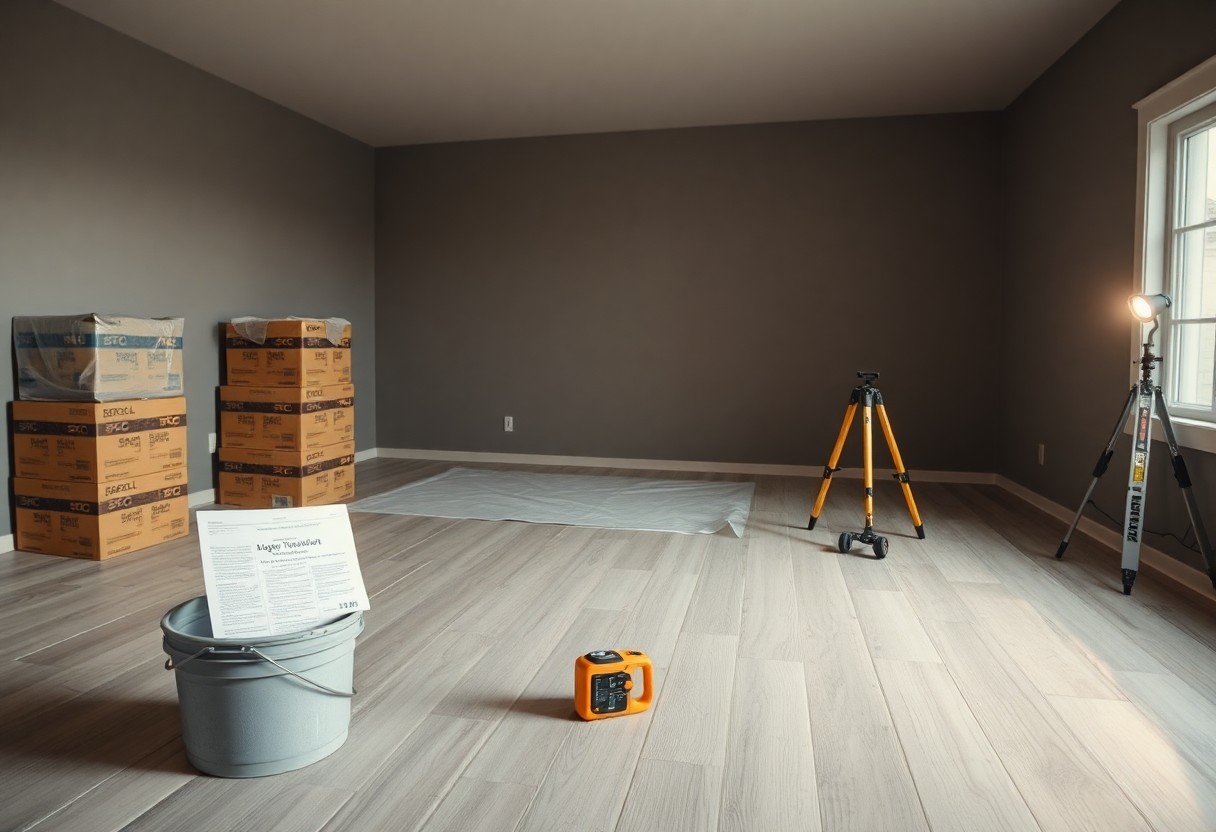
Preparation for Installation
Before you lay a single plank, clear the room of furniture and fixtures, remove baseboards if needed, and ensure the space is at a stable temperature of 65-80°F (18-27°C). Acclimate the flooring for 24-48 hours in the room where it will be installed, verify the subfloor is clean, dry, and flat to 3/16″ over 10 ft (4.8 mm/3.05 m), and patch any low spots with a polymer-modified leveling compound to a feather edge.
Factors to Consider Before Installing
Assess subfloor type (concrete, plywood, existing vinyl), moisture-use an ASTM F2170 RH test and target under 85%-and plan for traffic patterns and thresholds; check door clearances and whether underfloor heating will be used, since most SPC tolerates surface temps up to 80°F (27°C). Assume that you will need expansion gaps of 3-5 mm at all perimeters and around fixed objects.
- Subfloor flatness: ≤3/16″ over 10 ft (4.8 mm/3.05 m)
- Moisture limits: RH ≤85% per ASTM F2170
- Acclimation: 24-48 hours at install temperature
- Temperature range: maintain 65-80°F (18-27°C)
- Expansion gap: 3-5 mm around edges
- Underfloor heating: max surface 80°F (27°C) unless manufacturer allows higher
Tools and Materials Needed
Gather a tape measure, chalk line, 3-5 mm spacers, tapping block, pull bar, rubber mallet, utility knife and extra blades, jigsaw or circular saw with a fine-tooth carbide blade, straightedge or T-square, broom/vacuum, leveling compound and primer, moisture meter, and transition strips or reducers for thresholds.
For cutting, use a new T‑hook utility blade for straight snaps on 4-8 mm SPC; make 3-4 firm scores and snap where applicable, and switch to a jigsaw or circular saw with a 40-80 tooth fine-tooth blade for long rip cuts or curves. Choose a polymer-modified leveling compound rated for vinyl installations, and keep a hygrometer on site to monitor RH during work. Buy extra planks (5-10% overage) for pattern matching and waste.
Step-by-Step Installation Process
| Step | Action |
|---|---|
| Acclimation | Lay boxes flat in the room 24-48 hours to stabilize temperature and moisture. |
| Subfloor Prep | Clean, level, and repair so surface is dry and flat within 3 mm over 1 m; install thin underlayment if recommended. |
| Layout & Measurement | Plan plank runs, stagger end joints ≥150 mm (6″), and avoid final rows narrower than 50 mm (2″). |
| Plank Installation | Start along longest wall, click-lock planks with tapping block, maintain 6-10 mm (1/4″-3/8″) expansion gaps using spacers. |
| Finishing | Remove spacers, install trims and thresholds, seal wet areas, and follow manufacturer curing times. |
Subfloor Preparation
You must verify the subfloor is dry, clean, and flat within about 3 mm over 1 m; patch low spots with a cementitious leveling compound, secure squeaky boards, sweep and vacuum, and for concrete test moisture with a calcium chloride kit or relative humidity meter-if readings exceed manufacturer limits, install an appropriate vapor barrier or remedy moisture first.
Plank Installation Techniques
You should acclimate planks 24-48 hours, plan a layout that avoids narrow edge rows, and start along the longest straight wall; click the tongue into the groove at a shallow angle, use a tapping block for snug seams, offset end joints at least 150 mm (6″), and maintain a 6-10 mm (1/4″-3/8″) expansion gap around perimeter with spacers.
For complex cuts, score SPC with a utility knife and snap, or use a fine-tooth saw for curves; when joining multiple rooms or areas over 6 m (20 ft), install expansion transitions every 10-12 m or per manufacturer; keep a consistent stagger-6 to 12 inches (150-300 mm) between end joints-to reduce visible seams and improve stability.
Finishing Touches
After removing spacers, reinstall or fit baseboards and quarter-rounds without nailing through planks, fit transitions at doorways, and use silicone in wet zones; inspect seams for gaps and use a color-matched filler for small voids, then allow any adhesive or sealant to cure per product instructions, typically 24 hours before heavy traffic.
Choose transition profiles that match the total floor height and secure them to the substrate, not the planks, so the floor can expand; if using radiant heat confirm surface temperatures stay below about 27°C (80°F) per common SPC limits; maintain the finish with routine vacuuming and a damp mop using pH-neutral cleaner to protect the wear layer.
Tips for a Perfect Finish
Keep seams staggered by at least 6 in (150 mm) and maintain an expansion gap of about 1/4″ (6 mm) around walls so your SPC can move with temperature changes. You should verify subfloor flatness (no more than 3/16″ over 10 ft or 4.8 mm) and avoid nailing or gluing floating systems. Use a tapping block and pull bar to protect tongue-and-groove edges during assembly. The final check should include walking the floor, verifying gaps, and rolling with a 100 lb (45 kg) roller if the manufacturer recommends it.
- Verify subfloor flatness: ≤3/16″ in 10 ft (4.8 mm).
- Maintain expansion gap: ~1/4″ (6 mm) around perimeters.
- Stagger end joints ≥6 in (150 mm) for stability and appearance.
- Acclimate boxes 24-48 hours and keep room temperature 60-80°F (16-27°C).
Common Mistakes to Avoid
Forcing planks to fit by reducing perimeter gaps often causes buckling; you should always leave about 1/4″ (6 mm) at walls. Installing over a subfloor with >3/16″ deviation in 10 ft commonly leads to clicking or premature wear and can void warranties. Also avoid short stagger patterns (less than 6 in), improper use of underlayment where not specified, and skipping transition strips at doorways which prevent edge lifting.
Maintenance and Care
Vacuum with a soft-brush head daily in high-traffic areas and damp-mop weekly using a manufacturer-approved, pH-neutral cleaner; wipe spills within 24 hours to prevent staining. Use felt pads under furniture legs (1″ or larger), avoid steam cleaners and abrasive pads, and never apply wax-based products which can alter the wear layer.
Control indoor conditions between 60-80°F (16-27°C) and 35-55% relative humidity to minimize dimensional shifts, place rugs at entrances to trap grit, and rotate heavy furniture periodically to even wear. For stubborn marks, test a cleaner in an inconspicuous spot first; for oil or ink, apply isopropyl alcohol sparingly on a microfiber cloth and rinse. The manufacturer’s warranty will often require documented, regular maintenance.
Final Words
So by following proper subfloor prep, acclimation, precise cutting, and correct adhesive or click-lock techniques you ensure a durable, seamless SPC vinyl finish; check transitions, trim gaps, and allow for expansion, and you’ll confidently achieve a professional-looking result that protects your investment and performs well over time.