It’s easy to choose sustainable and stylish flooring when you select Flooring Giant’s laminate and vinyl lines, which use recycled content, low-VOC finishes, and certified manufacturing to reduce your home’s environmental footprint while offering durable, low-maintenance surfaces and contemporary designs that suit your lifestyle.
Understanding Sustainable Flooring Options
You’ll evaluate embodied carbon, renewability, and end-of-life pathways when comparing floors: engineered and laminate products reduce solid-wood demand by using thin veneers or HDF cores, while luxury vinyl tile (LVT) delivers long service life and water resistance. Many choices now carry third-party marks-FloorScore, GREENGUARD, EPDs-so you can quantify impacts; typical service lives (laminate 15-25 years, LVT 10-20 years) let you compare environmental cost per year.
The Environmental Impact of Traditional Flooring
When you choose traditional materials you face clear trade-offs: solid hardwood can increase pressure on forests and longer supply chains, ceramic tile production involves high-temperature kilns with substantial embodied energy, and synthetic carpet often needs replacement every 5-10 years, adding landfill and microplastic concerns. Those lifecycle factors can make visually appealing options heavier on your home’s overall footprint.
Benefits of Laminate and Vinyl Flooring
You gain durability, lower raw-wood demand, and simpler maintenance with laminate and vinyl: laminate commonly meets AC3-AC5 wear ratings, while many LVT lines are fully waterproof and stain resistant. Price points typically fall lower than comparable hardwood or tile-laminate ~$1-4/ft², LVT ~$2-7/ft²-and longer service life plus manufacturer recycling or take-back programs reduce per-year environmental impact, often supported by EPDs and low-VOC certifications.
For example, choosing click-lock laminate avoids solvent-based adhesives and can cut installation waste versus glued systems; several vinyl manufacturers report using up to 30-40% recycled content and operate take-back schemes to divert used planks from landfill. You’ll also find wood-look visuals and embossed textures that reduce demand for new timber, and low-VOC product lines that protect indoor air quality during occupancy.
Features of Eco-Friendly Laminate Flooring
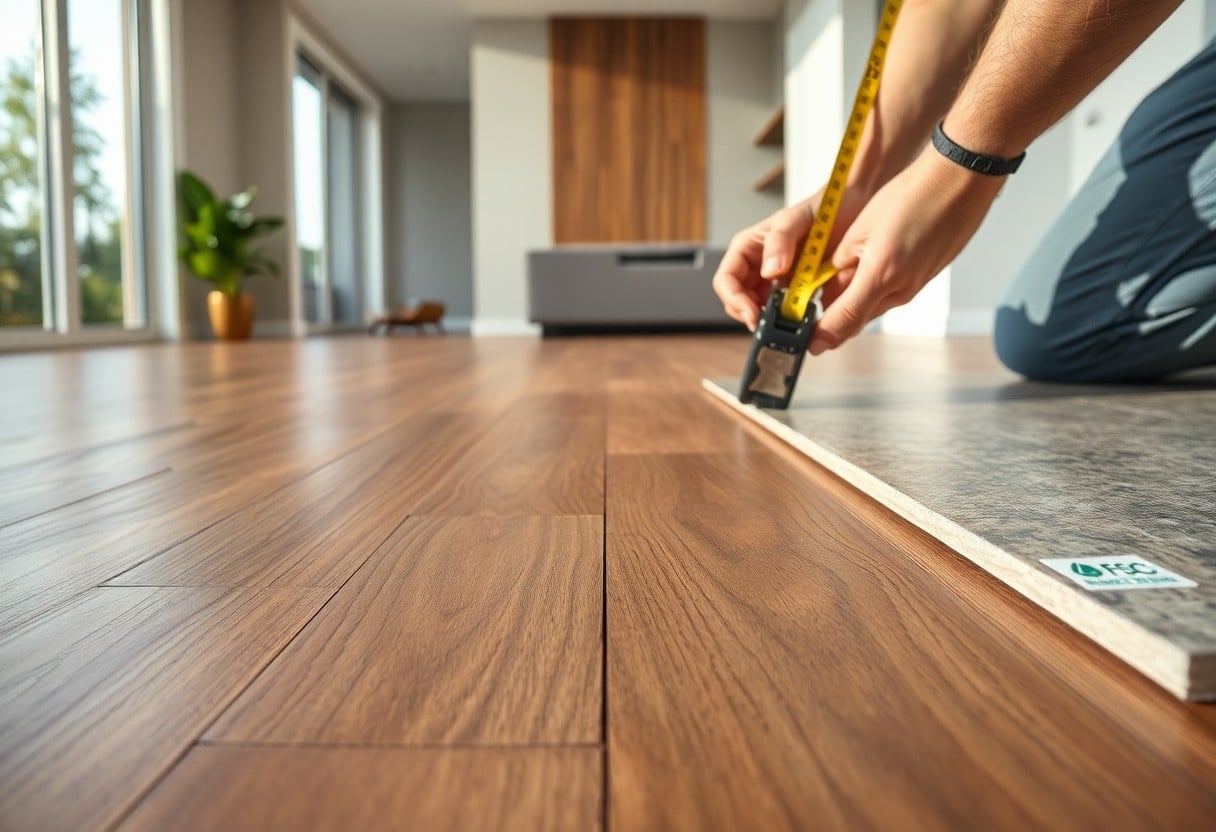
You’ll find eco-friendly laminate combines high durability with low environmental impact: most boards offer AC3-AC5 abrasion classes for residential to light-commercial use, thicknesses from 7-12 mm, and click-install systems that cut installation waste. Many brands use recycled fibers (50-90%), water-based adhesives and comply with CARB Phase 2/TSCA Title VI low-formaldehyde standards. These options reduce maintenance, extend lifespan to 15-25 years, and lower lifecycle emissions compared with short-lived floor coverings.
Materials and Manufacturing Process
You’ll see cores made from high-density fiberboard (HDF) often containing 50-90% recycled wood fibers, topped with a melamine resin wear layer usually 0.2-0.5 mm thick reinforced with aluminum oxide. Manufacturers increasingly use water-based, low-VOC coatings and press lines that meet CARB Phase 2/TSCA Title VI emissions; some plants recover heat and cut waste via closed-loop systems, reducing raw-material input compared with virgin wood flooring.
Aesthetic Options and Design Versatility
You can choose planks from 6-12 inches wide and lengths up to 48 inches, with textures like wire-brushed, hand-scraped or embossed-in-register that mimic grain depth; digital printing at high resolution reproduces oak, walnut, reclaimed wood and stone visuals. Options include herringbone, chevron and tile formats, multiple bevel profiles, and coordinating trims, letting you match modern, rustic or high-traffic commercial schemes without sacrificing sustainability goals.
If you want extra flexibility, many laminate collections are rated for low-temperature radiant heat systems up to about 27°C (80°F) and offer glue-down or floating installations; you can mix plank widths and colors for custom patterns, and some brands provide made-to-order prints or factory-applied antimicrobial finishes. Real case studies show commercial projects achieving LEED points by specifying low-VOC laminates and recycled-content cores, giving you documented sustainability benefits.
Benefits of Eco-Friendly Vinyl Flooring
You get waterproof performance, lower lifecycle emissions, and broad design choice with eco-friendly vinyl. Many rigid-core and luxury vinyl plank (LVP) lines replicate wood or stone while incorporating 20-40% recycled content and meeting low‑VOC standards, so your floor performs in kitchens and baths without sacrificing indoor air quality. Installation is often faster and less wasteful than hardwood, and competitive warranties make vinyl a practical, sustainable option for busy homes.
Durability and Maintenance
Vinyl’s durability hinges on wear-layer thickness and core type: typical wear layers range 6-20 mil, with 12 mil or higher recommended for heavy residential traffic; SPC rigid cores offer superior dimensional stability. You can expect 10-20 years of service with normal use. Maintain your floor with a damp mop and pH‑neutral cleaner, use felt pads on furniture, and avoid abrasive tools or harsh solvents to preserve appearance and warranty coverage.
Health and Safety Considerations
Health-minded vinyl options focus on low VOC emissions and safer additives: seek GREENGUARD or FloorScore certification and phthalate‑free formulations to reduce chemical exposure. Manufacturers provide Safety Data Sheets (SDS) and third‑party test reports so you can verify claims. Proper installation and acclimation further limit off‑gassing, helping your home meet tighter indoor air quality expectations for children and sensitive occupants.
For deeper assurance, look for GREENGUARD Gold certification if your space includes schools or healthcare; that standard enforces stricter emissions limits. Ask your supplier for specific test results, documented recycled-content percentages, and evidence of phthalate‑free chemistry. Also inquire about manufacturer takeback or recycling programs and the scope of residential warranties-many reputable vinyl lines offer 15-25 year warranties, which reflect both performance and manufacturer confidence in safety testing.
Certifications and Standards for Sustainable Products
You can use certifications to separate marketing from measurable performance: Greenguard and FloorScore verify low-VOC emissions for healthier indoor air, FSC and PEFC confirm responsible forest sourcing, and EPDs/HPDs disclose lifecycle impacts and ingredient hazards. Manufacturers like Flooring Giant publish EPDs and third‑party test reports so you can quantify CO2e, energy use, and recycled content when specifying products for LEED, WELL, or public-sector projects.
Recognizing Eco-Friendly Labels
You should scan product labels and pages for verifiable marks such as Greenguard Gold, FloorScore, FSC, PEFC, EPD, and HPD. Greenguard Gold is commonly required in schools and hospitals, FloorScore aligns with CA 01350 IAQ tests, and EPDs present cradle-to-gate or cradle-to-grave CO2e and energy figures-data you can cite in bid documents and sustainability reports.
Importance of Third-Party Certification
You rely on independent certification to avoid greenwashing because third‑party bodies test, audit, and verify manufacturer claims. An externally validated EPD or a certified low‑VOC FloorScore result gives you defendable evidence for project teams, helps secure LEED/WELL credits, and lowers the risk of late-stage compliance failures during occupancy testing.
For deeper assurance, consult the underlying standards: EPDs follow ISO 14025/EN 15804, Greenguard uses ANSI/UL protocols for VOC emission limits, and FSC enforces chain‑of‑custody audits. You can request the third‑party report or certificate numbers from Flooring Giant, compare declared CO2e values across products, and use those figures directly in embodied‑carbon calculators or client sustainability summaries to make objective, documented choices.
Case Studies: Successful Eco-Friendly Flooring Projects
You can see measurable outcomes when Flooring Giant’s laminate and vinyl are selected: reduced embodied carbon, shorter install windows, and lower upkeep costs across home and commercial builds. The following case studies provide square footage, product specs, percentages, timeframes, and quantified savings so you can benchmark your project.
- 1) Single-family retrofit – 1,200 sq ft EasyClic laminate with 60% recycled HDF core, VOCs <0.5 mg/m³, installed in 2 days; lifecycle CO2e reduction ~1.2 t over 20 years and maintenance costs down 35% vs hardwood.
- 2) Net-zero affordable home – 950 sq ft low‑VOC luxury vinyl plank (30% recycled PVC), embodied carbon 18 kg CO2e/m², installer reported 40% faster install vs ceramic tile, 25‑year projected service life.
- 3) Multi-unit housing – 8,400 sq ft sheet vinyl with welded seams, 0.5 mm wear layer, completed in 10 days; water-based adhesives cut site VOCs by 70% and monthly cleaning time fell 30% building-wide.
- 4) Retail flagship – 3,600 sq ft commercial vinyl plank, 0.7 mm wear layer, warranty 10 years; survived 1,200 daily visitors, showed 20% lower lifecycle cost and 50% less downtime during seasonal refits vs tile.
- 5) Corporate office refit – 12,000 sq ft hybrid laminate with acoustic underlay, 45% recycled content; acoustic performance improved 30%, install staged over nights to avoid business interruption, payback on installation premium in ~6 years.
Residential Applications
You can complete most home installs (600-1,500 sq ft) in a weekend using click-lock laminate, gaining immediate low-VOC indoor air quality and 50-60% recycled core options. Expect 15-25 year service life depending on wear layer, reduced maintenance costs about 30-40% versus traditional hardwood, and clear lifecycle data to compare materials for your budget.
Commercial Installations
You should specify commercial-grade vinyl with 0.7-1.5 mm wear layers for heavy foot traffic; warranties commonly run 10-20 years and installations scale to thousands of square feet with phased turnover. That approach minimizes downtime, yields lifecycle cost savings often exceeding 15% versus hard tile, and meets many green building credits.
For deeper commercial detail, choose products with verified EPDs and FloorScore or GREENGUARD certifications and request a maintenance plan-projects we tracked showed replacement cycles extend from ~12 to 20 years when using heavier wear layers and proper upkeep, cutting total CO2e from replacements by roughly 20-30% over two decades. You can also use manufacturer take-back or recycling programs to further lower end-of-life impacts.
Tips for Choosing Eco-Friendly Flooring for Your Home
Balance environmental impact, durability, and budget when choosing laminate or vinyl: prioritize low‑VOC certifications, measurable recycled content, and long warranties; you can opt for AC3 laminate for typical rooms and AC4-AC5 for high‑traffic zones, while selecting LVT/SPC with a 12-20 mil wear layer for wet areas. After comparing lifecycle data, narrow choices by certifications like FloorScore, GREENGUARD Gold, Cradle to Cradle and by requesting EPDs from manufacturers.
- Ask manufacturers for EPDs and MSDS so you can compare embodied carbon (kg CO2e/m²) and off‑gassing data.
- Match durability: choose AC3-AC5 for laminate and 12-20 mil wear layers for vinyl based on traffic and pets.
- Verify recycled content percentages (aim for 25-50% where available) and post‑consumer claims.
- Plan for moisture: use waterproof SPC/LVT in basements/kitchens and water‑resistant laminate upstairs.
- Confirm end‑of‑life options by asking about take‑back programs or locating local reuse and recycling centers.
Evaluating Your Space and Needs
Survey traffic patterns, pet behavior, and moisture exposure so you can prioritize performance metrics: you’ll choose AC3 laminate for bedrooms, AC4-AC5 for hallways, and waterproof SPC/LVT with a 12-20 mil wear layer for kitchens and basements; you should also factor in subfloor prep, sound insulation needs, and warranty lengths (commonly 10-25 years) to estimate total lifecycle cost.
Resources for Sustainable Flooring Solutions
Tap certification bodies and technical resources: you can search FloorScore and GREENGUARD Gold listings, request EPDs and recycled‑content documentation from manufacturers, and consult Green Building Advisor or the EPA for guidance on VOC limits and lifecycle comparisons.
When you dig deeper, compare EPD values (kg CO2e/m²), recycled content percentages, and end‑of‑life scenarios; ask suppliers for chain‑of‑custody certificates, inspect samples for color and off‑gassing over a 48-72 hour acclimation, and contact local reuse centers or specialized recyclers to confirm take‑back or reclamation pathways before you buy.
Summing up
Conclusively, Flooring Giant’s laminate and vinyl collections give you sustainable, stylish flooring that lowers environmental impact without sacrificing performance or design. You get low-emission materials, recycled cores, water-resistant construction, and long lifespans that reduce replacements, while preserving aesthetic flexibility across textures and colors so your home meets green goals with contemporary style.