Over time, your vinyl flooring can lose its luster without proper care. By implementing simple maintenance strategies, you can keep your floors looking brand new and extend their lifespan. This guide will provide you with effective tips and techniques to maintain your vinyl flooring, ensuring it remains attractive and durable for years to come. With just a few routine steps, you can achieve a clean and polished look that enhances your home’s aesthetic.
Understanding Vinyl Flooring
Vinyl flooring is a versatile and resilient option for various spaces in your home. It comes in different styles and textures, mimicking materials like hardwood, stone, or tile while offering the benefits of durability and easy maintenance. Whether you choose luxury vinyl planks or traditional vinyl sheets, this flooring type is designed to withstand heavy foot traffic and moisture, making it suitable for kitchens, bathrooms, and other high-use areas.
Types of Vinyl Flooring
When opting for vinyl flooring, you can choose from several types that suit your needs and aesthetic. Here’s a breakdown:
| Type | Description |
|---|---|
| Luxury Vinyl Plank | Resembles hardwood planks, offering an authentic appearance. |
| Luxury Vinyl Tile | Mimics the look of ceramic or stone tiles, suitable for high-moisture areas. |
| Sheet Vinyl | Continuous sheets that provide a seamless look and are easier to install. |
| Vinyl Composite Tile (VCT) | Durable tiles often used in commercial spaces, easy to maintain. |
| Peel-and-Stick Vinyl | Self-adhesive tiles for quick and uncomplicated installation. |
Thou should consider your space, budget, and aesthetic when choosing the right vinyl flooring for your home.
Common Benefits of Vinyl Flooring
Vinyl flooring provides numerous advantages, making it a popular choice for homeowners. Its waterproof nature makes it ideal for wet areas, while its resilience ensures it can withstand heavy foot traffic without significant wear. Additionally, vinyl is generally easier to install and can be done as a DIY project, saving you money on installation costs. With a wide range of styles available, you can effortlessly find a look that complements your home’s decor.
In addition to its aesthetic appeal and affordability, vinyl flooring is low-maintenance, requiring only regular sweeping and occasional mopping. Its non-porous surface prevents stains from setting in, making it a practical choice for families with children and pets. With proper care, vinyl can last 10-20 years, proving its longevity and value. Investing in quality vinyl ensures that you enjoy these benefits for years to come.
Daily Maintenance Tips
Keeping your vinyl floors looking new requires a few simple daily practices. Regular maintenance will not only enhance their appearance but also prolong their lifespan.
- Sweep or vacuum daily to remove dirt and debris.
- Spot clean spills immediately to prevent stains.
- Use a damp mop weekly for deeper cleaning.
- Place mats at entrances to catch dirt and moisture.
- Rotate furniture occasionally to avoid indentations.
The frequent upkeep will go a long way in preserving your floors.
Cleaning Routine
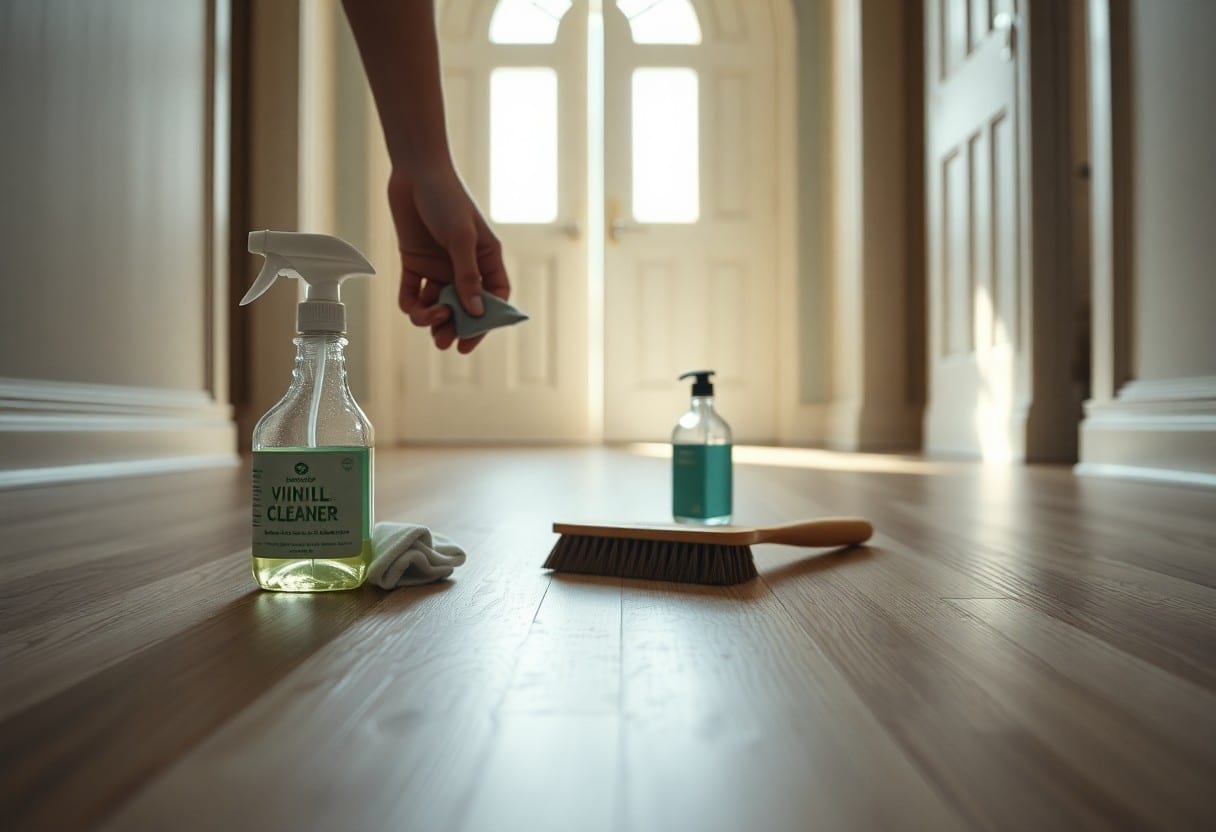
A consistent cleaning routine is vital to maintaining your vinyl floors’ sheen. Start by using a soft broom or vacuum to eliminate dirt and dust. For weekly care, damp mop with a mixture of warm water and a gentle cleanser specifically designed for vinyl. Avoid excess moisture, as standing water can cause damage over time.
Avoiding Damaging Products
It’s necessary to steer clear of harsh chemicals that can harm your vinyl flooring. Products containing ammonia, bleach, or abrasive materials can strip the protective layer and lead to discoloration. Instead, opt for pH-balanced cleaners that are safe for vinyl.
Using the wrong cleaning agents can result in permanent damage to your floors. For instance, ammonia-based cleaners are known to dull the finish, while vinegar may weaken the surface over time. Always check product labels for compatibility with vinyl surfaces, ensuring you maintain the integrity of your flooring. When in doubt, choose specialized vinyl cleaners that are designed to gently remove grime without compromising shine or safety.
Deep Cleaning Techniques
To restore your vinyl floors to their original shine, deep cleaning is imperative. This process goes beyond regular cleaning, targeting embedded dirt and grime that can accumulate over time. By following a systematic approach, you ensure your flooring remains pristine, enhancing its lifespan and appearance.
When to Deep Clean
Deep clean your vinyl flooring every 6 to 12 months, or sooner if you notice stubborn stains, buildup, or a dull finish. High-traffic areas may require more frequent attention. Seasonal changes or after special events can also serve as reminders to deep clean.
Step-by-Step Deep Cleaning Process
Start by removing furniture and sweeping the floor to eliminate loose debris. Next, prepare a cleaning solution using warm water and a gentle vinyl-safe cleaner. Use a mop to evenly apply the solution, allowing it to sit for a few minutes on tough stains. Finally, rinse with clean water and dry thoroughly to prevent water damage.
Step-by-Step Deep Cleaning Process
| Step | Description |
| 1 | Remove furniture and sweep thoroughly. |
| 2 | Prepare a vinyl-safe cleaning solution. |
| 3 | Mop the floors and let the solution sit. |
| 4 | Rinse with clean water and dry the area. |
For effective results, use a microfiber mop to avoid scratching the surface. Consider adding a few drops of vinegar to the cleaning solution for extra cleaning power against stubborn stains. Always test any new cleaning solution in a small, inconspicuous area first to ensure it won’t affect your flooring’s finish.
Additional Tips for Deep Cleaning
| Tip | Description |
| Regular Maintenance | Combine deep cleaning with regular maintenance for lasting results. |
| Spot Cleaning | Address spills immediately to prevent stains. |
| Use Proper Tools | Select tools that are gentle but effective on vinyl. |
Managing Scratches and Scuff Marks
Scratches and scuff marks can detract from the appearance of your vinyl flooring, but with the right approach, you can manage them effectively. Regular inspections will help you identify any damage early, allowing for timely intervention. Implementing protective measures, such as using furniture pads and area rugs, will further minimize wear and maintain your flooring’s original look.
Preventative Measures
To prevent scratches and scuff marks, invest in furniture pads for the legs of your chairs and tables. Avoid dragging items across the floor, and place mats at entry points to trap dirt and debris. Additionally, maintaining appropriate humidity levels in your home can reduce vinyl warping and cracking, enabling your floors to withstand daily use.
Repairing Minor Damage
When minor scratches occur, quick repairs can help you maintain the integrity of your vinyl floors. For superficial scratches, a cleaning solution with a microfiber cloth can often do the trick, while more noticeable marks may require a specialized vinyl floor repair kit. These kits typically include color-matched vinyl repair compounds, allowing you to seamlessly fill in and disguise flaws.
If you’re dealing with minor scratches, start by cleaning the affected area thoroughly with a pH-balanced vinyl cleaner. Apply a small amount of repair compound using a putty knife, ensuring it matches your floor color. Gently smooth it out and allow it to dry completely. For deeper gouges, you might need to follow up with fine sandpaper to blend the edges before using a touch-up marker to restore color. Keeping your repair kit handy can make future fixes simple and quick, ensuring your floors remain pristine.
Environmental Factors to Consider
Environmental factors play a significant role in maintaining your vinyl flooring. Key considerations include humidity, temperature, and sun exposure, which can impact the longevity and appearance of your floors.
- Monitor humidity levels
- Avoid extreme temperature fluctuations
- Utilize UV protection for sun-exposed areas
- Consider using rugs to shield from dirt and debris
This awareness helps ensure your floors remain in pristine condition.
Humidity and Temperature Effects
| High Humidity | Can cause vinyl to warp and create buckling. |
| Low Humidity | May lead to cracking and drying out of vinyl material. |
| High Temperatures | Can soften the vinyl, causing indentations. |
| Low Temperatures | Can make the vinyl brittle and susceptible to damage. |
Sun Exposure and UV Protection
Direct sunlight can cause vinyl flooring colors to fade and degrade over time. To mitigate this issue, consider placing area rugs or furniture strategically to block intense sunlight. Additionally, specialized window treatments can further shield your floors from harmful UV rays.
Vinyl flooring is particularly sensitive to prolonged sun exposure, which can alter its appearance and texture. Installing UV-resistant window films or using blinds can effectively reduce the risk of fading. It’s advisable to rotate rugs periodically to prevent uneven color changes, ensuring your flooring maintains a consistent look throughout your space.
Long-Term Care Strategies
For long-term care of your vinyl flooring, establish a routine that includes regular cleaning and inspections. Regular sweeping or vacuuming will prevent dirt buildup, while mopping with a gentle cleaner can maintain its shine. Ensure you address any stains promptly to avoid permanent damage. Additionally, consider applying a protective sealant every few years, which can enhance durability and keep your floors looking pristine over time.
Seasonal Maintenance Tips
Adapting your cleaning routine with the changing seasons can significantly improve your vinyl floors’ longevity. In spring and summer, focus on thorough deep cleaning, while fall and winter may necessitate more frequent cleaning to tackle dirt and debris brought in from outside.
- Increase cleaning frequency during wet months to prevent moisture buildup.
- Use doormats during seasons with heavy dirt or snow.
- Inspect for wear and tear after extreme weather changes.
Recognizing the seasonal impact on your floors allows you to tailor your maintenance strategy effectively.
Protection from Heavy Furniture
Heavy furniture can easily dent or scratch your vinyl flooring if proper precautions are not taken. Utilize furniture pads or sliders underneath the legs of heavy items to distribute weight and prevent damage. When moving furniture, lift rather than drag to maintain the integrity of your flooring.
Investing in furniture pads is necessary; they come in various materials and sizes to suit every piece of furniture. For example, felt pads work well on hard surfaces and ensure smooth movement without causing friction. Alternatively, rubber pads provide extra grip for stability. Regularly check pads for wear to ensure they continue protecting your floors. Additionally, consider rearranging heavy furniture periodically to avoid prolonged pressure on specific spots, enhancing the durability of your vinyl flooring over time.
To wrap up
To wrap up, keeping your vinyl floors looking new requires simple yet effective maintenance practices. Regularly sweep or vacuum to remove debris, and use a damp mop with a mild cleaner to tackle stains. Avoid harsh chemicals that can damage the surface, and place mats at entrances to minimize dirt. By consistently following these steps, you can ensure that your vinyl flooring remains attractive and durable for years to come.