Durability should be your top factor when selecting flooring; assess traffic patterns, moisture exposure, and maintenance expectations so you can match materials to each room. Balance upfront cost with lifespan by comparing warranties and installation quality, and prioritize finishes and underlayment that extend performance – practical decisions that help you get durable, budget-wise results without sacrificing style.
Understanding Flooring Materials
When comparing materials, weigh density, moisture resistance, and maintenance; hardwood offers longevity while laminate and LVT deliver water resistance. Use concrete metrics: solid hardwood can last 50-100 years with periodic refinishing, engineered varieties 10-30 years, and vinyl/LVT typically 10-25 years. You should check Janka scores (white oak ~1,360) and manufacturer warranties-many laminate and vinyl lines guarantee 10-25 years for residential use.
Hardwood Flooring
Hardwood choices split between solid and engineered; solid can be sanded and refinished 3-7 times and often lasts 50-100 years, while engineered tolerates moisture better but typically lasts 10-30 years. You should compare species by Janka hardness-white oak ~1,360, hickory ~1,820-and factor in installed cost ranges of roughly $5-15 per sq ft. For high-traffic rooms, select harder species or a thicker wear layer.
Laminate Flooring
Laminate gives realistic wood looks at lower cost; standard options run $1-5 per sq ft for materials and often install as floating floors. You should use AC ratings to match traffic: AC3 handles residential living rooms, AC4 fits busy homes and light commercial, AC5 is for heavy commercial use. Note that traditional laminate swells if exposed to standing water, so choose water-resistant cores or waterproof options for kitchens and basements.
Construction-wise, laminate combines a wear layer, high-resolution design layer, HDF core and backing; thickness from 6-12 mm affects stiffness and sound. You should prefer 8-12 mm with quality underlayment for reduced noise and better feel. Installation uses click-lock systems-DIY is common-and maintenance requires damp mopping and quick spill cleanup. In one rental case study, an AC4 laminate with waterproof core lasted eight years under pets before replacement.
Budget-Friendly Options
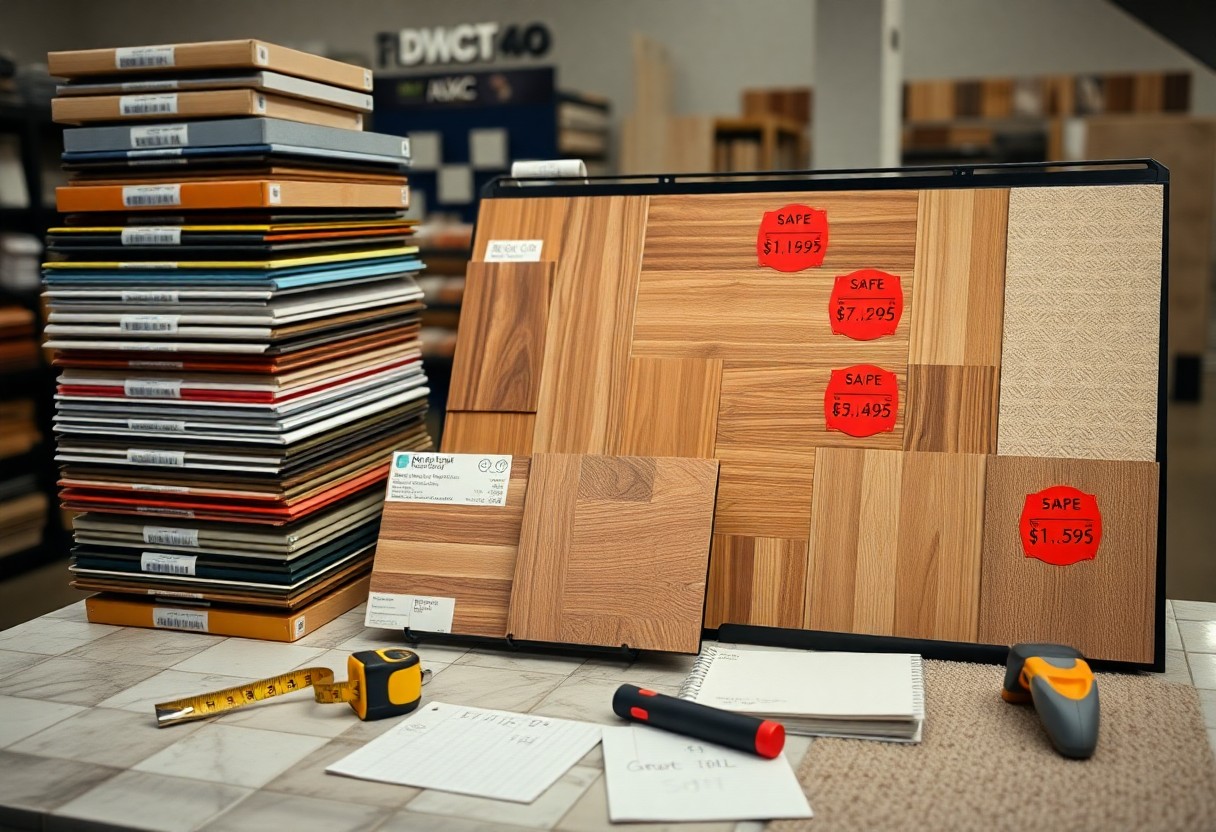
You can prioritize durability without overspending by focusing on resilient, low-maintenance materials for high-traffic zones and reserving premium surfaces for focal rooms; swapping hardwood in halls for engineered or vinyl often cuts costs 30-50% while retaining a long lifespan, and targeting 3-4 rooms at a time lets you phase upgrades without compromising performance or resale value.
Vinyl Flooring
You’ll find modern vinyl (LVP/LVT and rigid SPC) combines waterproof performance with affordability: retail prices typically range $1.50-$5.00 per sq ft, core thickness 4-8 mm, and wear layers from 12-30 mil-12-20 mil suits most homes, 20+ mil for heavy commercial traffic; choose click-lock for DIY installs or glue-down for large, flat spaces to reduce installation costs.
Carpet Choices
You should match fiber and construction to use: nylon and triexta resist stains and abrasion, face weights of 40-80 oz/yd² perform well in busy homes, and loop or low-profile cut-loop carpets (Berber styles) handle hallways better; budget runs $1-$6 per sq ft, and investing in a 6-8 lb density pad extends wear and comfort markedly.
You can also lean on warranties and fiber treatments-triexta platforms often carry 20-25 year stain warranties and maintain color, while nylon with protective treatments offers higher abrasion resistance; ask installers for face weight, twist level (more twists = better resilience), and sample high-traffic mockups to see real wear before committing.
Durability Factors to Consider
Assess density, finish and exposure: hardwood Janka values (oak ~1,360 lbf, hickory ~1,820 lbf) indicate scratch resistance; laminate uses AC ratings (AC3 for moderate residential, AC4/AC5 for commercial); vinyl relies on wear-layer thickness (12-20+ mil) and tile on PEI ratings (PEI IV-V for heavy use).
- Traffic patterns: entryways vs bedrooms
- Moisture risk: bathrooms, basements, kitchens
- Maintenance model: refinishing versus replacement
Knowing which metric aligns with your room prevents costly mismatches and extends service life.
Wear Ratings and Lifespan
You can gauge longevity by rating systems: Janka (hardwood), AC (laminate), PEI (tile) and mil thickness (vinyl). Expect solid hardwood to last 30-100 years with refinishing every 7-10 years, engineered wood about 20-30 years, laminate and luxury vinyl 10-25 years depending on wear layer and traffic, and porcelain tile often exceeding 50 years; compare manufacturer warranties (10-25 years) for realistic expectations.
Maintenance Requirements
You should match upkeep to material: sweep or vacuum daily in high-traffic zones, mop with pH-neutral cleaners for vinyl and tile, and avoid standing water on laminate and hardwood. Refinish hardwood every 7-10 years and plan for laminate replacement when the core is exposed; seal grout annually or every 1-3 years and use entry mats plus felt pads to reduce abrasion.
Humidity control is vital: keep your home between 30-50% RH for hardwood stability and acclimate LVT/vinyl 48-72 hours before install. For heavy-use areas pick vinyl with 20+ mil wear layer or AC4/AC5 laminates to cut cleaning frequency, and schedule professional deep cleaning or recoat cycles every 2-5 years based on traffic and finish.
Aesthetic Versatility
How your floors look can be as important as how they perform: you can pair durability with design by choosing materials that mimic premium looks-LVP that recreates European white oak, engineered planks with real oak veneer, or large-format porcelain tiles that resemble marble. For example, 24×48 porcelain slabs offer dramatic veining with stain resistance, while engineered 7-9″ wide oak planks create a modern, spacious feel without sacrificing wear performance.
Colors and Styles
When identifying color and pattern, balance aesthetics with maintenance: lighter tones hide dust and small scratches, while mid-tone greys and tans maximize resale appeal; dark walnut shows wear faster in high-traffic zones. You can choose plank widths-3-5″ for traditional, 7-9″ for contemporary-or patterns like herringbone and chevron to elevate a room; tile formats such as 12×24 or 24×48 influence perceived scale and grout visibility.
Textures and Finishes
Texture and finish change both look and longevity: matte and satin polyurethane soften reflections and mask surface scratches, whereas high-gloss highlights every scuff. Options include wire-brushed, hand-scraped, or smooth sawn surfaces; finish chemistry matters too-aluminum-oxide coatings on hardwoods and multi-coat urethane systems (3-7 coats) increase abrasion resistance, while LVP wear layers of 12-20 mil indicate light to heavy commercial durability.
For practical room choices, pick wire-brushed oak with a 7-coat urethane for busy kitchens, 20-mil wear-layer LVP for mudrooms or rentals, and textured porcelain with slip-rated surfaces for wet areas. You should expect oil finishes to need periodic re-oiling, whereas polyurethane and aluminum-oxide systems offer simpler cleaning and longer intervals between refinishing-plan accordingly for lifecycle cost and maintenance.
Installation Methods
Different methods – floating click-lock, glue-down, and nail-down – change how resilient your floor is to traffic and moisture. Floating systems like click-lock LVP or laminate let you install over existing subfloors in hours and handle slight movement, while glue-down vinyl or tile provides superior load distribution for heavy furniture. Nail-down hardwood gives longevity but demands a level subfloor and professional tools.
DIY vs. Professional Installation
If you’re handy, a floating floor can be DIY in 1-3 days for a 200-400 sq ft room, saving 30-50% versus hiring pros. However, improper subfloor prep or poor adhesive use can cause squeaks, cupping, or void warranties. Professionals average $40-75/hour or charge per sq ft but deliver accurate leveling, complex cuts, and faster turnaround for high-value materials.
Cost Implications
Material plus installation typically runs: laminate $2-5/sq ft, luxury vinyl $3-7/sq ft, engineered hardwood $6-12/sq ft, and tile $8-15/sq ft installed. You should factor in underlayment ($0.30-1/sq ft), trims, and delivery. Choosing a glue-down luxury vinyl instead of click-lock might raise labor by $1-2/sq ft but improves longevity in high-moisture areas.
You’ll face hidden expenses that often push budgets up: removal of old flooring costs $1-3/sq ft, subfloor repairs $2-6/sq ft, and complex layouts add labor premiums of 10-25%. For a 500 sq ft kitchen, plan an extra $500-1,500 for repairs and disposal, and keep a 10-20% contingency so you don’t skimp on underlayments or adhesives that affect long-term durability.
Long-Term Value
Over decades, your flooring choice determines replacement cycles and total cost: hardwood can last 75-100 years with periodic refinishing, tile often exceeds 50 years, engineered wood 20-40 years, and vinyl plank 10-25 years. When you factor in upkeep-refinishing hardwood at about $2-4/sq ft or replacing worn LVP-you’ll often find higher upfront cost materials lower your annualized expense; compare expected service years to get true value.
Resale Considerations
Because many buyers prioritize durable, low-maintenance floors, you’ll see stronger appeal with hardwood and quality LVP; hardwood frequently shortens market time and can add roughly 1-3% to sale price in some regions. Neutral finishes and durable wet-area options like porcelain tile also boost buyer confidence. When selling, highlight maintenance records, transferrable warranties, and recent refinishing or replacements to maximize perceived value.
Cost-Effectiveness Over Time
Start by calculating lifecycle cost per year: for 1,000 sq ft, LVP at $3-7/sq ft installed ($3k-$7k) lasts 10-25 years; hardwood $8-15/sq ft ($8k-$15k) with refinishing extends life to 75+ years; tile $5-15/sq ft ($5k-$15k) endures 50+ years. You should include expected maintenance, replacement cycles, and warranty length when dividing total cost by expected service years to compare options objectively.
Example: over 20 years for 1,000 sq ft, LVP installed at $5k with one replacement at year 20 averages $250/year; hardwood at $12k plus one refinishing at year 15 ($2.5k) averages about $725/year but continues service beyond 20 years; tile at $10k with minimal upkeep averages ~$500/year over 20 years. Adjust local labor and material rates to see which scenario fits your budget and timelines.
To wrap up
So you can make a smart, long-lasting choice without overspending: evaluate your room’s traffic and moisture, compare materials and warranties, get samples and consult installers, and factor in maintenance and life-cycle costs so your flooring delivers maximum durability and value for your budget.