Flooring choices can significantly impact your home’s aesthetic and functionality. In this post, you’ll explore the distinct characteristics of dry back and click-lock vinyl flooring, helping you make an informed decision that suits your lifestyle and preferences. By understanding the advantages and disadvantages of each type, you can select the right option for your space, ensuring durability and style for years to come.
Overview of Vinyl Flooring
Vinyl flooring has surged in popularity due to its durability, versatility, and cost-effectiveness, making it an ideal choice for various settings. It comes in multiple styles, including sheets, tiles, and planks, enabling you to create a customized look that suits your taste. With advancements in technology, vinyl flooring now offers heightened realism in appearance and texture, resembling natural wood and stone. Additionally, its water resistance makes it suitable for kitchens, bathrooms, and basements, ensuring you find a product that meets both practical and aesthetic requirements.
What is Dry Back Vinyl Flooring?
Dry back vinyl flooring, also known as glue-down vinyl, requires adhesive for installation, providing a permanent solution that’s ideal for high-traffic areas. This type of flooring is typically thicker and more stable, making it an excellent option for commercial environments. With a secure bond to the subfloor, it minimizes the risk of movement and shifting, ensuring longevity and durability underfoot.
What is Click-Lock Vinyl Flooring?
Click-lock vinyl flooring features a user-friendly installation method that utilizes a locking mechanism, allowing you to fit planks together without adhesive. This design not only simplifies the installation process, making it suitable for DIY projects, but also allows for easier removal and replacement. The floating floor system provides additional cushioning, making it comfortable underfoot while offering versatility in various indoor environments.
For those considering click-lock vinyl flooring, you benefit from a quick installation process that can often be completed in just a day, depending on your room size. This product comes in numerous designs and textures, allowing you to achieve the appearance of hardwood or stone at a fraction of the cost. Many options also feature sound-absorbing layers, enhancing the acoustic comfort of your space, making them especially appealing in open-concept homes or apartments.
Installation Methods
When deciding between dry back and click-lock vinyl flooring, the installation methods differ significantly, influencing your overall experience and results. Understanding these distinct processes can help you choose the best option for your project and skill level.
Dry Back Installation Process
The dry back installation process requires adhesive to bond the flooring to the subfloor. You’ll need to apply a high-quality adhesive frequently using a notched trowel, strategically laying each plank with precision to avoid gaps. Proper acclimation of the flooring and subfloor preparation is imperative to ensure long-lasting durability.
Click-Lock Installation Process
The click-lock installation method offers a straightforward approach, as planks snap together without glue, allowing easy alignment and adjustment. You simply lay the planks over an underlayment, ensuring a stable base before locking them into place. This method is ideal for DIY projects, often requiring minimal tools or expertise.
With click-lock vinyl flooring, you can typically install it over most existing surfaces, including concrete and wooden floors, without the need for additional adhesives. This system reduces installation time significantly, often enabling you to complete the project in a single day. The ease of assembly encourages homeowners, as the straightforward interlocking design minimizes the potential for misalignment, enhancing both the aesthetic appeal and structural integrity of your flooring. Plus, the lack of adhesive means there’s no waiting for drying time, allowing you to enjoy your new floor almost immediately.
Cost Analysis
When evaluating flooring options, cost is a fundamental factor that influences your decision. Dry back vinyl flooring typically involves lower initial material costs than click-lock options but often requires additional expenses for adhesive and installation. Conversely, while click-lock vinyl may have a higher purchase price, its straightforward installation process can reduce labor costs and time.
Initial Costs of Dry Back vs. Click-Lock
Your initial investment in dry back vinyl flooring is generally lower, with materials priced around $1.50 to $4.00 per square foot. In contrast, click-lock vinyl usually ranges from $2.00 to $5.00 per square foot due to its innovative design and ease of installation. While dry back may save you money upfront, consider installation and additional materials when calculating total costs.
Long-Term Value and Maintenance Costs
Over time, the long-term value of your flooring choice will significantly impact your budget. Dry back vinyl may save you money during the installation phase but can have higher maintenance costs due to the need for adhesive replacement or repairs. Click-lock options offer better durability, requiring less frequent replacement and reduced upkeep, ultimately leading to lower long-term expenses.
Choosing click-lock vinyl can yield substantial savings in the long run. Its interlocking design often provides better resistance to wear and moisture, minimizing the likelihood of damage and the need for repairs. As you consider life cycle costs, take into account that click-lock may reduce your investment in maintenance products and services, making it a financially sound choice for busy households seeking durability and ease of care.
Performance and Durability
When assessing performance and durability, both dry back and click-lock vinyl flooring offer notable strengths, but their applications can differ. Dry back vinyl adheres directly to the subfloor, providing a solid, stable base that can handle heavy foot traffic. Click-lock vinyl, however, allows for easier installation and removal, which may appeal to those needing flexibility in maintenance or replacement timelines.
Water Resistance and Longevity
Water resistance is a significant advantage of vinyl flooring, especially for areas prone to moisture. Both dry back and click-lock options typically feature a top layer that repels water, but dry back may offer slightly better longevity since it eliminates seams where water could infiltrate, extending the lifespan of your flooring under wet conditions.
Resistance to Wear and Tear
In terms of wear and tear, both types of vinyl flooring are engineered to withstand daily use, yet they exhibit differences in resilience. Dry back vinyl has a more robust structure due to its glued-down installation which ensures it remains flat and stable, while click-lock systems, although durable, might be more susceptible to movement and potential damage at the seams over time.
To investigate deeper into resistance to wear and tear, dry back flooring is often rated for commercial use, meaning it can handle heavy traffic and resist scratches, dents, and other forms of damage effectively. It typically features thicker wear layers, often exceeding 20 mils, ensuring that it holds up against harsher conditions. Click-lock vinyl, while still sturdy with wear layers around 12 to 20 mils, is generally better suited for residential applications. If you prioritize durability, dry back may be the more advantageous choice, especially in high-traffic areas like retail or busy hallways.
Comfort and Sound Insulation
When choosing between dry back and click-lock vinyl flooring, comfort and sound insulation play a significant role in your overall satisfaction. Both types have unique attributes that cater to different needs, whether you prioritize a softer underfoot experience or enhanced noise reduction. Consider how each option influences the ambiance and livability of your space.
Underfoot Comfort and Feel
Underfoot comfort varies greatly between dry back and click-lock vinyl. Dry back installations often provide a more solid feel due to their adhesive backing, making them suitable for high-traffic areas. Conversely, click-lock systems typically feature a softer core that offers a bit more cushioning, which may be preferable in spaces like bedrooms or family rooms, enhancing your comfort while standing or walking.
Acoustic Properties
The acoustic properties of flooring can significantly impact your home’s atmosphere. With dry back vinyl, the sound dampening is generally less effective compared to click-lock vinyl. The latter often includes sound-absorbing layers, which reduce noise transmission between rooms, making it an ideal choice for multi-story homes or apartments where keeping noise levels down is imperative.
For effective sound insulation, click-lock vinyl flooring stands out as it frequently incorporates advanced technologies, such as foam or cork underlayment that not only absorb sound but also enhance thermal comfort. This means if you have kids or pets running around, the click-lock system will minimize the sound of footsteps, providing a quieter indoor environment. Studies show that homes with vinyl flooring can experience a reduction of over 20 decibels in noise transmission, enhancing peace and tranquility in your living space.
Aesthetic Options
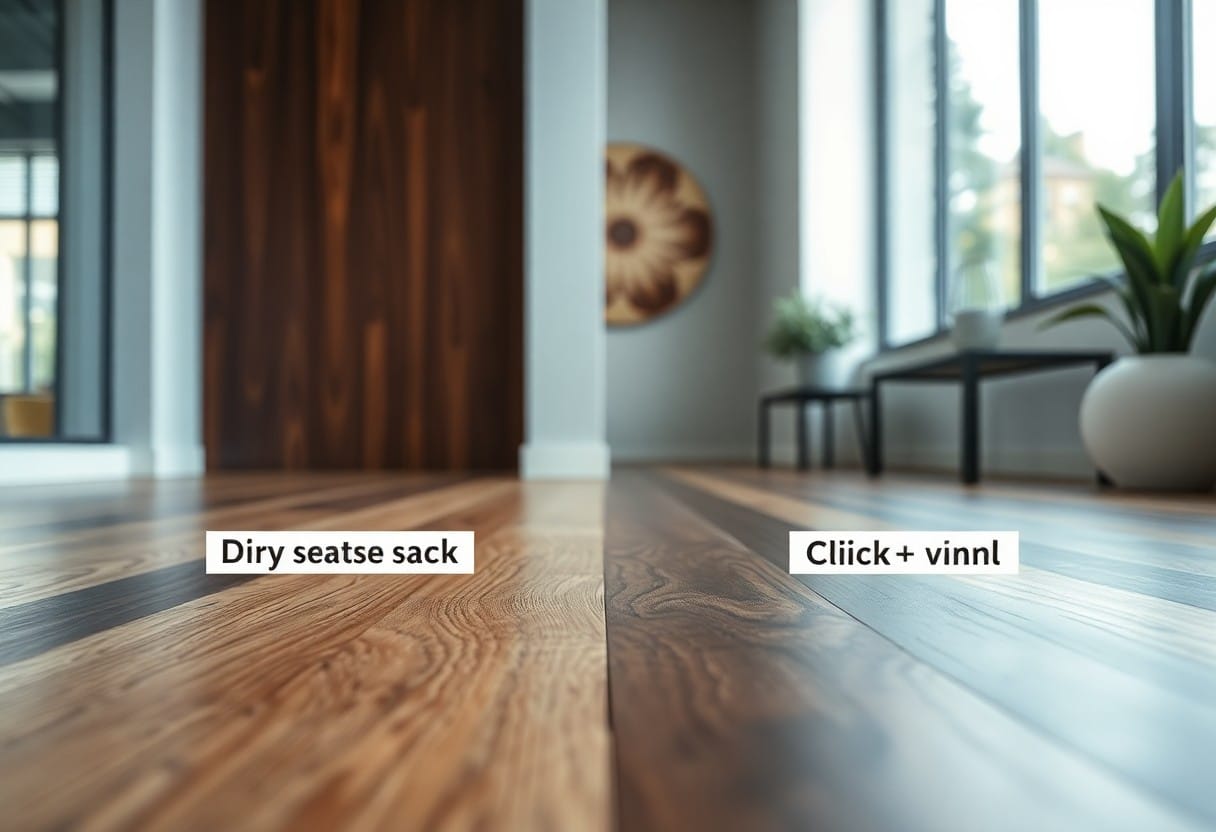
Aesthetic choices significantly impact your flooring selection process, as both dry back and click-lock vinyl flooring offer diverse styles, colors, and finishes to enhance your space’s appeal. You can find options that mimic natural materials, like wood and stone, while enjoying the practical benefits of vinyl flooring.
Design Choices for Dry Back
With dry back vinyl flooring, you can choose from a wide array of designs, including realistic wood grains and elegant stone patterns. The adhesive installation allows for seamless designs that create a polished look, perfect for high-end residential or commercial spaces. Customization is also possible, enabling you to select unique tiles or planks that suit your aesthetic vision.
Design Choices for Click-Lock
Click-lock vinyl flooring presents a variety of designs that also imitate natural materials, with the added advantage of easy installation. You’ll find options ranging from rustic oak to modern tiles, giving you the flexibility to match your personal style effortlessly. The unique locking mechanism allows for installation without glue, making it easy to replace or update styles over time.
Click-lock systems come in various thicknesses and textures, enhancing the realistic appearance of the flooring. You can select from embossed finishes that replicate the feel of real wood or slate, with diverse color palettes ranging from light to dark shades, allowing you to create a unique ambiance in your rooms. Whether you’re aiming for a cozy cottage vibe or a sleek contemporary look, click-lock vinyl offers an abundance of choices to meet your desires.
To wrap up
With these considerations, you can make an informed choice between dry back and click-lock vinyl flooring. Each option has its advantages and drawbacks, depending on factors such as installation preferences, moisture resistance, and maintenance requirements. Assess your specific needs and environment to determine which flooring type aligns with your lifestyle and expectations, ensuring you achieve the best result for your space.