You get classic style and long-term durability with dry back vinyl flooring, combining authentic wood and stone looks, durable wear layers, and low maintenance for homes and commercial spaces.
Defining Dry Back Vinyl Construction
Dry-back vinyl uses adhesive-bonded backing to fix planks directly to the subfloor, giving you a low-profile installation that resists movement and simplifies cleaning while preserving classic plank aesthetics in high-traffic areas.
The Anatomy of a Glue-Down Plank
Layered construction pairs a wear layer, printed design, core, and adhesive-ready backing so you get visual realism, surface protection, and reliable adhesion for long-term stability.
Superior Dimensional Stability
Engineered cores and dense vinyl formulations limit expansion and contraction, so you experience fewer gaps and buckles across temperature or humidity shifts.
Thermal and moisture-resistant cores like rigid vinyl or SPC reduce dimensional change, allowing you to install larger planks with confidence; pairing the right adhesive and substrate preparation controls moisture transmission and adhesion, ensuring consistent seams, predictable performance, and extended lifespan in both residential and commercial installations.
Engineering for Long-Term Durability
You benefit from dense cores, moisture-stable backings, and precision bonding that keep dry back vinyl performing under heavy foot traffic and routine cleaning for years.
High-Performance Wear Layers
Advanced wear layers give you UV-stable, stain-resistant protection that preserves printed designs while resisting scuffs and daily abrasion.
Impact and Scratch Resistance
Impact and scratch resistance help you avoid dents and surface marks from dropped items, pet claws, and moving furniture in busy areas.
Thicker wear layers combined with cross-linked polymers and scratch-resistant coatings give you improved indentation recovery and long-term surface integrity, while reinforced backings reduce seam stress and lower the need for repairs.
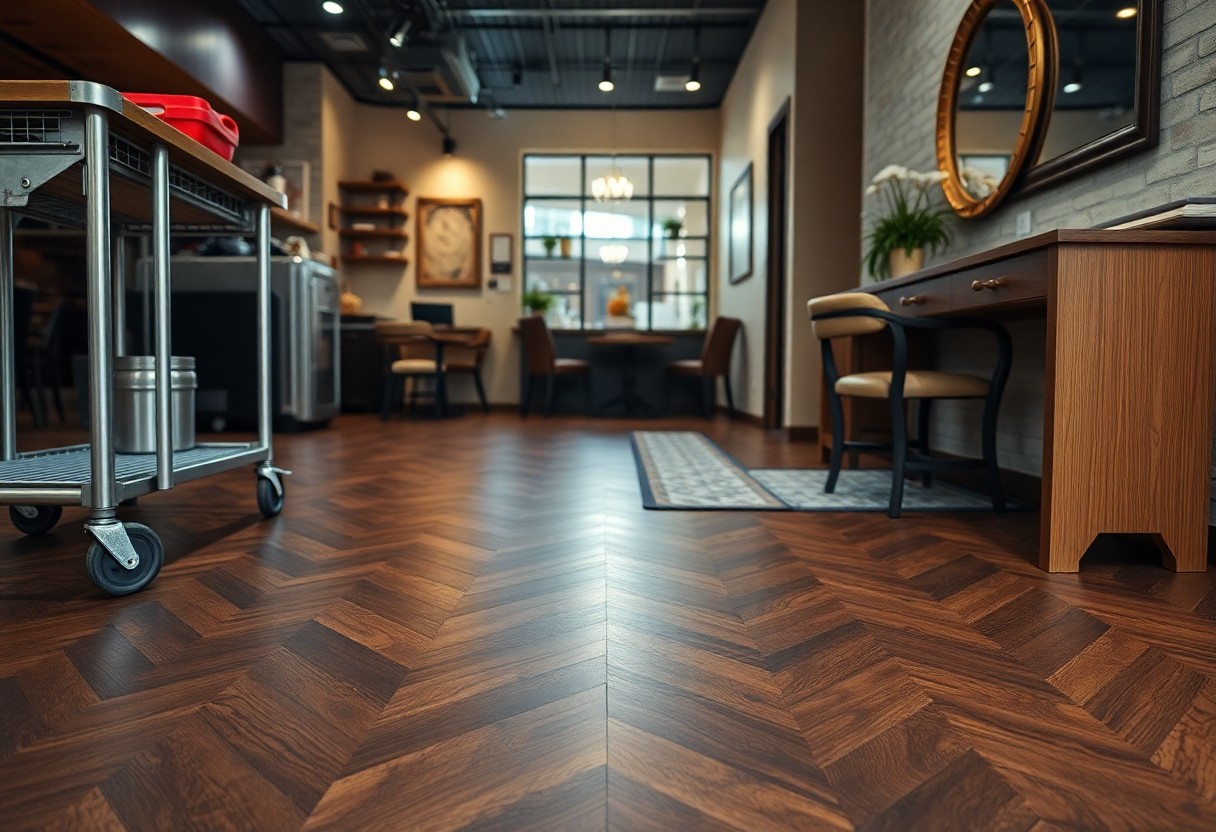
Key Advantages for Commercial and Residential Use
Your operations and living spaces benefit from dry back vinyl’s durability, low maintenance, and plentiful design options, making it suitable for heavy foot traffic, frequent cleaning, and long-term appearance retention.
Moisture Resistance and Waterproofing
You can install dry back vinyl in kitchens and bathrooms because its dense core and properly sealed seams resist water, limiting subfloor damage and simplifying cleaning routines.
Cost-Effectiveness and Longevity
Investing in dry back vinyl gives you lower upfront costs and long service life, reducing replacement frequency and improving lifecycle value for both homes and businesses.
Lower maintenance needs mean you spend less on upkeep, while simple repairs and strong warranties protect your investment over decades.
Professional Installation Requirements
Contractors should follow manufacturer guidelines, control room humidity, and allow adhesive cure times so you get long-term performance and warranty compliance.
Essential Subfloor Preparation
Inspect and level subfloors, remove contaminants, and address moisture with appropriate testing so you can prevent adhesive failure and ensure flat seams.
Selecting the Correct Adhesive
Choose an adhesive rated for dry-back vinyl and your subfloor type, following pot life and open time recommendations so you achieve secure bonding.
Adhesive selection requires checking compatibility with the vinyl backing, substrate porosity, and documented moisture limits; you should match trowel notch size for full transfer, apply primer on highly porous surfaces, and use epoxy or moisture-mitigation systems when readings exceed manufacturer limits to protect the bond and maintain warranty coverage.
Maintenance and Care Protocols
You should maintain dry back vinyl by sweeping or vacuuming daily, damp-mopping with a pH-neutral cleaner, and wiping spills immediately to protect seams and ensure long-term performance.
Routine Cleaning Best Practices
Vacuum high-traffic areas and use a microfiber mop for routine damp cleaning; you should avoid abrasive pads, excessive water, and harsh detergents that dull the wear layer.
Protecting the Surface Finish
Protect the finish by placing entrance mats, applying felt pads under furniture, and choosing rubber-free chair casters so you prevent scratches and staining.
When you lift heavy items, use protective boards instead of dragging, rotate rugs to disperse wear, and consult the manufacturer before applying polishes or restorers.
Conclusion
Considering all points, you should choose dry back vinyl flooring when you want classic style combined with long-term durability; it delivers stable, low-maintenance performance and sustained appearance that protects your investment.