Just ensure you prep and level the subfloor, control moisture, let materials acclimate, apply the correct adhesive evenly, align tiles precisely, and clean debris to prevent gaps, bubbles, and premature failures during dry back vinyl installation.
Subfloor Preparation Oversight
Neglecting Surface Leveling and Smoothing
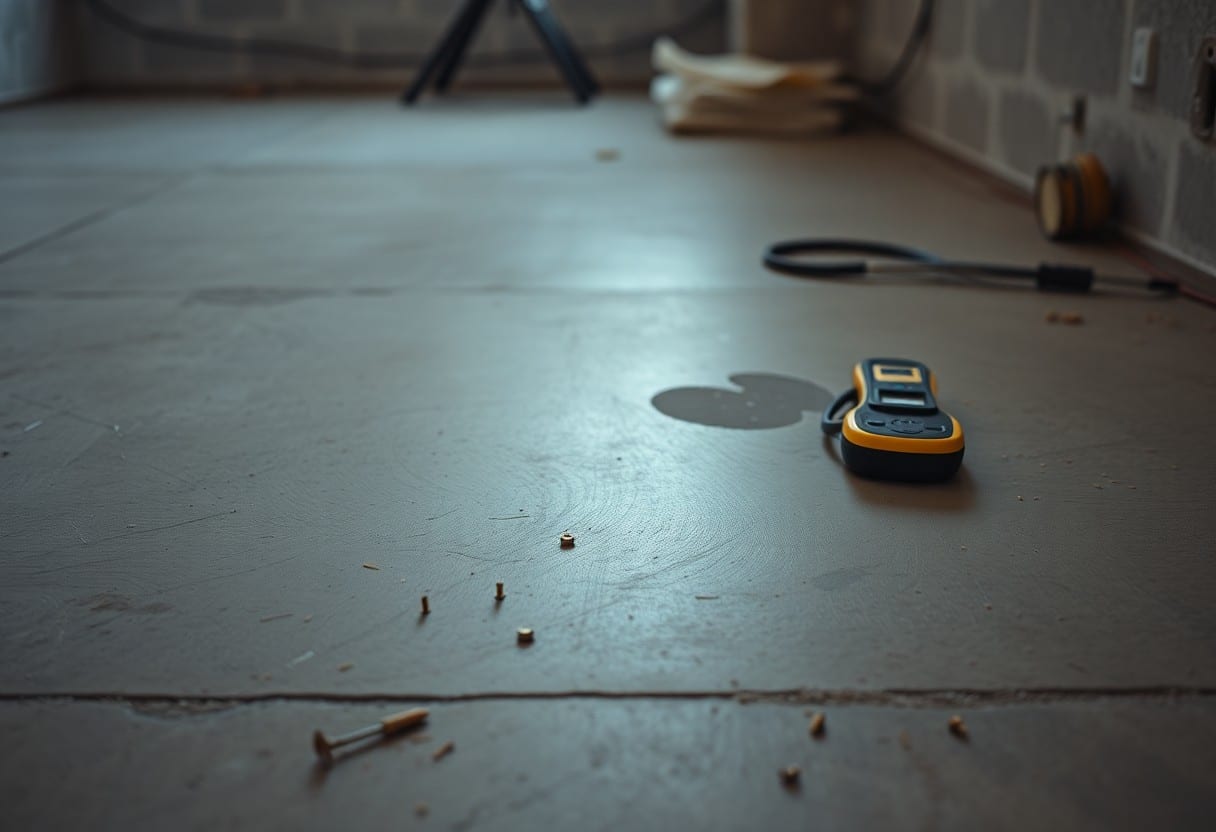
Uneven subfloors create visible ridges and force adhesives to fail, so you must sand, grind, or use a self-leveling compound until the surface is flat within manufacturer tolerances before laying the dry back vinyl.
Overlooking Essential Moisture Testing
Moisture can ruin adhesion and cause warping; you should perform moisture tests across the floor and avoid installation when readings exceed the manufacturer’s allowed limits.
Before testing, map high-risk zones and follow manufacturer or ASTM methods, taking multiple calcium chloride or in-situ RH readings and documenting results so you know where moisture exceeds allowed thresholds; if readings exceed limits you must use approved vapor mitigation, improve drainage, or delay installation until levels drop.
Improper Material Acclimatization
Before installing, you should acclimate dry-back vinyl on-site for at least 48 hours, flat and unopened, to prevent expansion, buckling, or adhesive failure.
Disregarding the 48-Hour Resting Period
You risk gaps or warping if you skip the 48-hour resting period; allow flooring to settle to room humidity and temperature before laying.
Failing to Regulate Ambient Room Temperature
Maintain consistent room temperature (65-85°F) and 40-60% humidity for 48 hours before and after installation to avoid plank movement and weak adhesive bonds.
Acclimatization Checklist
| Issue | Action |
|---|---|
| Incorrect storage | Lay boxes flat, keep unopened, avoid direct sunlight |
| Short resting time | Allow full 48 hours on-site before installation |
| High subfloor moisture | Test and remediate moisture before acclimation |
| Extreme humidity | Use dehumidifiers or humidifiers to reach 40-60% RH |
Check HVAC and ventilation so you maintain steady temperatures; fluctuations force vinyl to expand or contract, leading to gaps, ridging, or adhesive failure.
Temperature Control Steps
| Problem | Remedy |
|---|---|
| Temperature swings | Run HVAC continuously during acclimation and installation |
| Cold subfloor | Warm subfloor per manufacturer before laying adhesive |
| Unstable humidity | Monitor RH and use humidifier/dehumidifier to stabilize |
| Open doors/windows | Keep area closed to prevent drafts and sudden shifts |
Adhesive Application Errors
Adhesive mistakes often cause weak bonds and plank lift; you must apply consistent coverage, avoid puddles, and follow manufacturer spread rates to secure a durable dry back installation.
Using Incorrect Trowel Notch Sizes
Wrong trowel notch size leaves voids or excess adhesive; you should match notch to the product and substrate to achieve proper contact and prevent telegraphing under the vinyl.
Mismanaging Flash Time and Open Time
Timing of flash and open time affects bond strength; you must follow manufacturer windows, adjust for temperature and humidity, and test tack to avoid poor adhesion.
When you mismanage flash and open time, the adhesive can skin over or remain too wet, producing weak bonds, bubbles, or adhesive squeeze-out. You should perform a tack test, monitor ambient conditions, work in controllable sections, and adjust wait times for heat and humidity. Follow the manufacturer’s timing chart and document conditions so you can reproduce successful application and reduce callbacks.
Layout and Alignment Mistakes
Layout errors such as crooked starter rows, inconsistent plank spacing, or ignored expansion gaps quickly make the installation look amateurish; you must establish reference lines and monitor alignment throughout the job.
Proceeding Without a Precise Centerline
Skipping a precise centerline forces you to tweak rows later, causing uneven borders and visible stair-step runs; snap a true centerline and lay symmetrically to avoid alignment drift.
Creating Unnatural Pattern Repeats and “H” Joints
Repeating identical plank sequences or aligning seams to form “H” joints draws the eye to defects; you should randomize plank lengths and stagger end joints to maintain a natural, balanced appearance.
Staggering plank ends by at least 6 inches (150 mm) between adjacent rows prevents “H” joints and keeps seams looking random. If you pre-sort boards by length and mix pieces from different boxes, you reduce pattern repeats; lay a dry run to spot repeats, adjust starter cuts to balance edge widths, and check sightlines from the main entry as you progress.
Installation Technique Flaws
Improper technique during dry back installation leads to loose seams, uneven adhesion, and premature wear; you should follow manufacturer sequencing, use correct tools, and maintain steady pressure to avoid costly repairs.
Inadequate Rolling and Pressure Application
Failing to apply uniform rolling pressure or using the wrong roller causes inconsistent adhesive contact; you must roll systematically with proper weight and multiple passes to secure full bond.
Leaving Trapped Air Pockets and Gaps
Trapped air pockets and gaps create blisters and weak spots where moisture and dirt can collect, so you need to detect and address them before the adhesive cures.
If you spot small bubbles, lift the plank edge slightly and press outward to release air, then re-roll; for stubborn voids use a needle to vent and apply pressure, or remove and reapply sections when adhesive has fully set to ensure long-term adhesion and a flat finish.
Post-Installation Care Failures
You risk peeling and adhesive failure when post-installation care is ignored; moisture, heavy loads, and inappropriate cleaners undermine the bond and shorten floor life.
Premature Foot Traffic and Furniture Loading
Avoid walking on or loading furniture before the adhesive cures; you must wait the manufacturer-specified time to prevent shifting, wrinkles, and edge lift.
Utilizing Incompatible Cleaning Agents
Use only pH-neutral, vinyl-safe cleaners; if you apply harsh solvents or ammonia-based products you’ll dull the wear layer and attack adhesives.
Harsh cleaners break down the vinyl surface and can seep into seams, weakening adhesive bonds; you should test any product on a scrap piece, follow manufacturer recommendations, rinse residues, and maintain pH-neutral routines to protect finish and bonding.
Final Words
Conclusively you must prep the subfloor, use correct adhesive amounts, acclimate planks, keep seams tight, and control dust and moisture to prevent gaps, bubbles, and adhesive failures.