There’s a practical choice between vinyl and hardwood; you should weigh cost, longevity, maintenance, moisture resistance, and style to determine which option best suits your home’s needs.
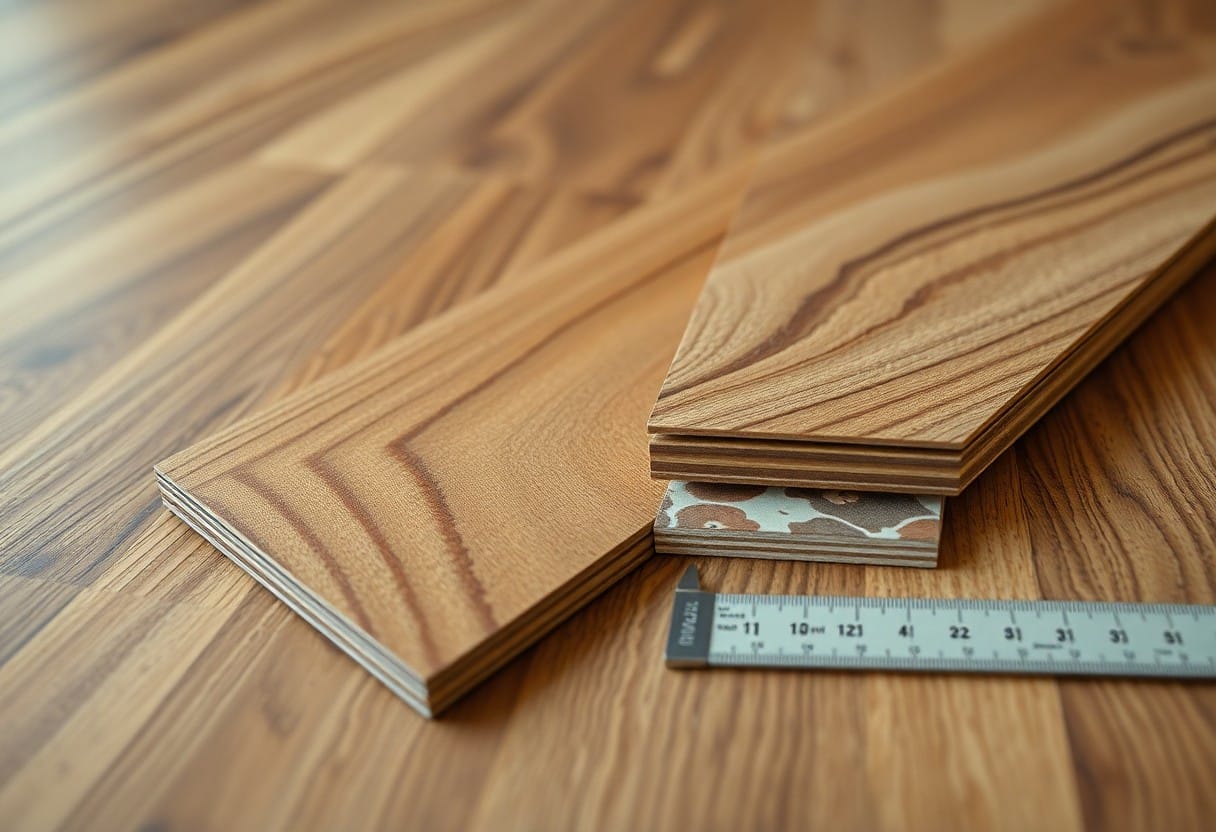
Composition and Structural Differences
Structure determines how flooring handles moisture and wear, so you should weigh durability, subfloor needs and installation complexity when choosing.
Solid and Engineered Hardwood Anatomy
Solid hardwood is a single-piece timber ideal for refinishing, while engineered hardwood layers a real-wood veneer over plywood; you should choose engineered where moisture or stability are concerns.
Luxury Vinyl Plank (LVP) and Tile (LVT) Technology
Luxury vinyl combines a clear wear layer, high-resolution printed design and a rigid or flexible core to give you water resistance, easy cleaning and convincing wood or stone visuals.
Construction often uses SPC or WPC cores with varying wear-layer thickness and attached underlayment; you can expect strong dimensional stability, quicker floating installs and longevity tied mainly to wear-layer quality.
Durability and Environmental Resistance
Compare how vinyl and hardwood hold up over time; you should weigh moisture resistance, scratch performance, and finish longevity when choosing flooring.
Moisture, Humidity, and Water Damage Performance
Vinyl typically resists standing water and high humidity better than hardwood, so you can install it in basements, bathrooms, or kitchens with lower risk of warping.
Resistance to Scratches, Dents, and Daily Wear
Hardwood shows dents and scratches more easily, so you should factor in dog claws, heavy furniture, and traffic when deciding maintenance and refinishing needs.
Surface textures and wear layers determine long-term scratch resistance: you’ll find thicker wear layers and tougher coatings on commercial-grade vinyl, while hardwood can be sanded and refinished several times but will dent under concentrated impact; you should match material choice to your pet habits, furniture pads, and how often you’re willing to refinish or replace boards.
Aesthetic Appeal and Real Estate Value
You weigh visual impact versus return: vinyl offers versatile looks and lower upfront cost, while hardwood often signals luxury that can increase resale value.
Visual Authenticity and Texture Variations
Textures and finishes influence how buyers perceive quality; you’ll find high-grade vinyl replicates grain and sheen, but real hardwood provides unmatched tactile depth.
Impact on Property Resale and Market Perception
Buyers often expect hardwood in prime neighborhoods, so you might secure higher offers; vinyl can be acceptable in lower-price or rental markets.
Market trends and local demand shape how flooring affects sale outcomes; if you choose hardwood, you should consider maintenance costs, finish grade, and consistency across rooms to maximize appeal, while vinyl lets you update looks affordably and keep competitive in time-sensitive sales.
Installation Complexity and Requirements
Installation of hardwood requires thorough subfloor preparation and acclimation, whereas you can install many vinyl options over imperfect substrates more quickly.
Professional Hardwood Fastening and Sanding
Hardwood installation usually requires professional nailing or stapling, precise board alignment, and sanding plus finishing passes that you should entrust to experienced installers.
DIY-Friendly Click-Lock and Glue-Down Vinyl Systems
Vinyl click-lock planks let you float a floor with basic tools, while glue-down systems need adhesive and careful subfloor prep you can handle on weekends.
Many DIYers prefer click-lock for speed and minimal mess, but you should test moisture levels, follow manufacturer adhesive instructions for glue-down installations, use recommended underlayment for sound and comfort, and allow proper acclimation time to avoid gaps or buckling.
Maintenance and Long-Term Longevity
Consider how upkeep alters value: hardwood accepts refinishing and can last generations with periodic sanding, while vinyl resists scratches and moisture with minimal upkeep. You should weigh replacement costs, traffic, and humidity when choosing the maintenance profile that suits your household.
Refinishing Potential and Lifespan of Natural Wood
Wood can be sanded and refinished several times, so you can extend its life for decades; you should expect fewer replacement cycles than with vinyl, but each refinishing removes material and adds cost.
Cleaning Protocols and Synthetic Surface Care
Vinyl cleans easily with mild detergent and a damp mop, so you can maintain appearance without specialty products; avoid abrasive tools and steam mops to protect the wear layer.
You should dust or dry-mop frequently to remove grit, use pH-neutral cleaners or diluted dish soap for spills, rinse thoroughly to prevent residue, apply felt pads under furniture, and avoid waxes or oil-based polishes to preserve finish and warranty.
Financial Investment and ROI
Upfront Material and Labor Cost Comparison
Cost Snapshot
| Vinyl | Hardwood |
|---|---|
| Materials: $2-7 / sq ft | Materials: $6-15 / sq ft |
| Installation: $0.50-2 / sq ft | Installation: $3-8 / sq ft |
| Typical lifespan: 10-25 years | Typical lifespan: 30+ years |
Compare per-square-foot expenses: vinyl materials and installation typically run $2-7, while hardwood often costs $6-15 plus refinishing; labor varies by complexity, so you can save significantly choosing vinyl upfront.
Lifecycle Expenses and Return on Investment
Consider maintenance and lifespan: vinyl needs minimal upkeep and lasts 10-25 years, while hardwood can last decades with refinishing, and you may recoup more on resale if you plan a long-term stay.
Long-term, calculate total cost of ownership: you’ll pay less yearly for vinyl thanks to low maintenance, spot repairs, and no refinishing, but expect to replace it sooner. Hardwood demands periodic refinishing (every 7-15 years), higher repair costs, and higher initial outlay, yet often increases home value and yields stronger ROI in higher-end markets when you sell.
To wrap up
You should pick hardwood if you prioritize resale value, timeless aesthetics, and refinishing potential; choose vinyl if you need cost-effective moisture resistance, scratch tolerance, and easier upkeep-match your budget, lifestyle, and room humidity to determine the best fit for your home.