Flooring performs best with routine, practical care; you should sweep or vacuum regularly, wipe spills immediately with a damp cloth, and use cleaners formulated for laminate. Place felt pads under furniture, use mats in high-traffic areas, control humidity, and avoid steam mops or abrasive tools. By following these straightforward habits you protect finishes and joints so your floors stay attractive and durable for years.
Understanding Laminate Flooring
What is Laminate Flooring?
Laminate combines a high-density fiberboard (HDF) core, a photographic design layer that replicates wood or stone, and a clear wear layer; you install it as a floating, click-lock floor over underlayment. Typical plank thickness runs 6-12 mm, and products carry AC ratings (AC1-AC5) so you can match durability to traffic levels like bedrooms (AC2-AC3) or busy living areas (AC3-AC4).
Benefits of Laminate Flooring
You gain hardwood or tile aesthetics at a lower price-materials often range $1-4 per ft²-while getting strong scratch and stain resistance suited to pets and kids. Many laminates offer AC3/AC4 durability, straightforward DIY-friendly click installation, and minimal upkeep compared with unfinished wood, making them practical for kitchens, hallways, and rentals where quick turnaround matters.
Additionally, water-resistant core options (SPC/WPC) and manufacturer warranties commonly span 10-25 years, so you can select products for damp areas or commercial-lite use. Installation is fast-a 1,000 ft² room can often be finished in 1-2 days by pros-reducing labor and downtime versus sanding and finishing solid hardwood, which matters when you’re managing renovations or occupancy schedules.
Daily Care Tips
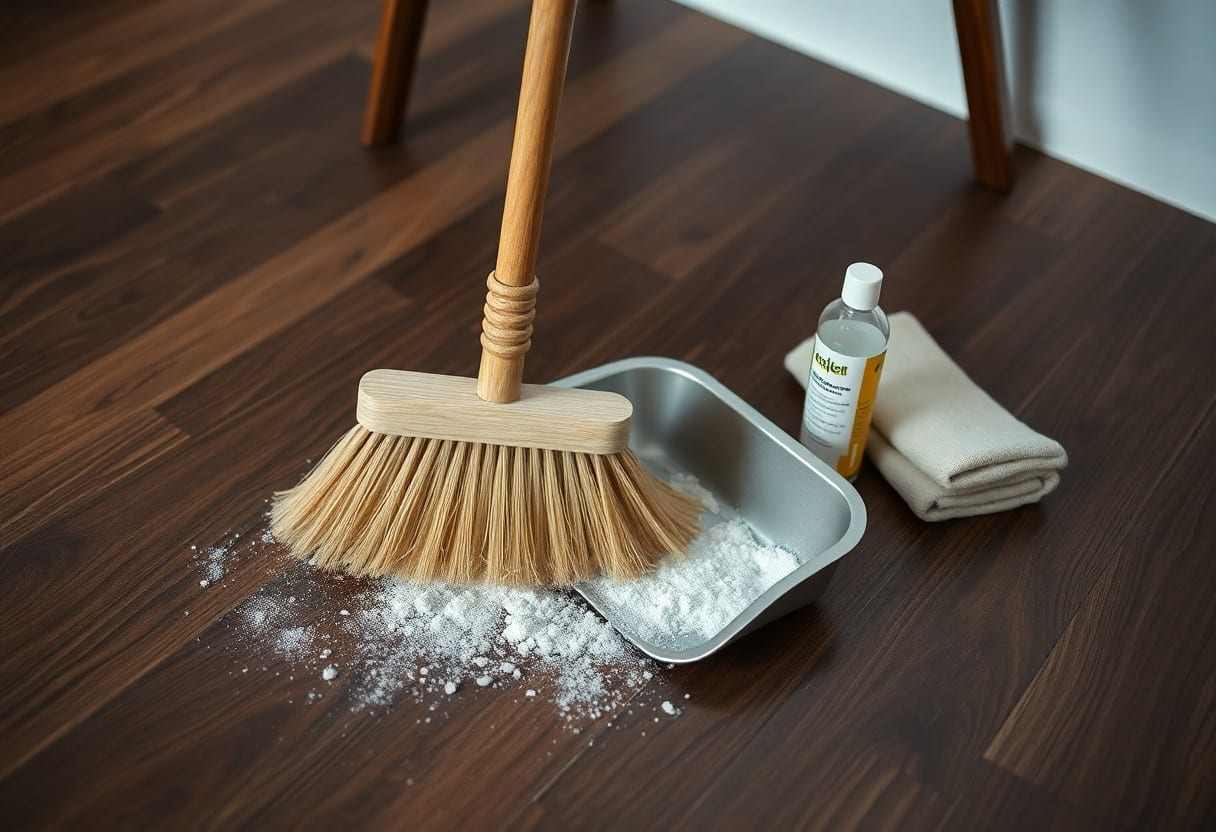
You should sweep or vacuum high-traffic areas 2-3 times weekly and the rest of the home at least once a week to remove grit that scratches. Use a microfiber dust mop for quick touch-ups and wipe spills within 24 hours to prevent swelling. After
- Use a soft-bristle broom or vacuum with a hard-floor setting to avoid scratches.
- Keep entry mats at doors to trap dirt and grit before it reaches your floors.
- Maintain indoor humidity between 30-50% to limit plank movement and gaps.
- After
Cleaning Practices
You should use a damp microfiber mop and a manufacturer-approved pH-neutral cleaner; dilute cleaners per label instructions and avoid soaking the floor. Vacuum crevices with a soft brush attachment and wipe sticky spots immediately. Steam mops are not recommended because excess moisture and heat can delaminate boards. For high-traffic zones, deep-clean monthly and let floors air-dry 5-10 minutes to prevent moisture intrusion.
Preventing Damage
You can prevent dents and scratches by applying 1/4″ felt pads to all furniture legs and replacing them every 6-12 months; use caster cups under rolling chairs. Trim pet nails every 2-3 weeks and avoid spike heels or stone-soled shoes indoors. Use area rugs in entryways and under dining tables, and keep heavy furniture lifted or slid on proper sliders when moving to protect the locking seams.
For more protection, install 3-layer walk-off mats that extend at least 3 feet inside doors and a door threshold for sliding doors to reduce grit and moisture transfer. Consider window films that block 70-99% of UV to slow fading; in kitchens, use chair glides and a 3-4 mm thickness rug pad under runners to distribute weight. Track felt-pad wear and replace pads when you see scratches begin to form.
Weekly and Monthly Maintenance
You should vacuum or sweep high-traffic areas 1-2 times per week with a soft-brush attachment and use a microfiber dry mop daily for dust pickup. Damp-mop once weekly in busy rooms and monthly for whole-room maintenance using a manufacturer-approved, pH-neutral laminate cleaner diluted as directed; avoid soaking the floor and never use abrasive pads. Wipe spills within minutes to prevent swelling, and rotate rugs and furniture every 1-3 months to even out wear patterns.
Deep Cleaning Techniques
When deeper cleaning is needed, use a microfiber mop with a laminate-specific cleaner or a diluted solution (test first) and work in 2-3 foot sections to avoid streaks. For scuffs make a paste of baking soda and water applied gently with a soft cloth; for ink or grease, dab isopropyl alcohol sparingly and rinse. Avoid steam mops and harsh solvents, and let the floor dry within 10-20 minutes to prevent moisture penetration.
Periodic Inspection
Inspect the floor monthly in high-traffic zones and quarterly across the whole installation for gaps, lifted edges, surface wear, and seam separation. Check transition strips, door thresholds, and under sinks for swelling or discoloration; measure room humidity with a hygrometer and keep it between 35-65% to limit expansion. If you spot buckling, gaps over 1/8 inch (≈3 mm), or darkened boards, plan immediate repair steps to prevent spread.
For more thorough checks, keep spare planks from the original install and carry a moisture meter to spot hidden leaks-readings above ~12% at the core indicate moisture intrusion. Tighten loose trims and replace damaged transition pieces, and document locations with photos to track progression; if damage involves multiple boards or subfloor issues, schedule a professional assessment to determine whether plank replacement or subfloor drying is required.
Repairing Damage
Identifying Common Issues
Surface scratches and dents from pets or moving furniture are the most frequent problems you’ll see, often confined to the wear layer. Water exposure can swell boards within 24-48 hours and cause edge lifting or discoloration. You may notice 1-3 mm gaps during seasonal humidity shifts or deeper chips where high heels strike; assessing whether damage is cosmetic or structural guides your repair approach.
DIY Repair Solutions
You can fix minor scratches with laminate repair kits, wax sticks, or touch-up markers available in 6-10 color blends to match your floor. Small chips fill with tinted putty or two-part epoxy that sands smooth; surface dulling responds to a commercial laminate polish. For click-lock planks, replacing a single board typically takes 15-45 minutes with a pull bar, tapping block, and matching replacement plank.
When replacing a plank you should acclimate the new board in the room for 48 hours, remove baseboards, and unlock neighboring rows with a pull bar to slide the damaged piece out. Trim the replacement for a precise fit, click it into place, then reinstall trim and confirm an 8-10 mm expansion gap. Inspect the subfloor for moisture or mold first-if you find buckling or widespread damage, enlist a professional.
Protecting Your Floors
Use entry mats and runners in high-traffic zones and place breathable rug pads under area rugs to prevent trapping moisture; avoid rubber-backed mats that can discolor laminate. Attach 1/8-1/4 inch (3-6 mm) felt pads to chair and table legs and replace them every 6-12 months. For sun-exposed rooms, apply window film that blocks up to 99% of UV rays to reduce fading and maintain finish longevity.
Furniture Placement
Distribute heavy loads by positioning sofas and cabinets on wider feet or a 1/2 inch (12 mm) plywood pad to spread weight, especially under pianos or appliances over 200 lbs (90 kg). Use wide, soft rubber or felt glides at least 2 inches (50 mm) in diameter on casters to reduce point pressure, and always lift rather than drag furniture when rearranging to avoid scratches and seam damage.
Humidity Control
Maintain indoor relative humidity between 35% and 55% and temperatures around 60-80°F (16-27°C) to prevent cupping or gapping; keep a 1/4-1/2 inch (6-12 mm) expansion gap around perimeter during installation so planks can expand. Monitor conditions with a digital hygrometer and use portable humidifiers or dehumidifiers as seasonal changes demand to keep movement within safe limits.
For more control, set a humidifier to roughly 40-45% in dry winter months and run a dehumidifier when levels exceed 55% in summer; small digital hygrometers cost $10-30 and give real-time readings. If you observe seam gaps larger than 1/8 inch (3 mm) or noticeable cupping, adjust humidity gradually over several days to avoid shock. Consider integrating a whole-house humidifier or dehumidifier if your home swings widely seasonally.
Avoiding Mistakes
Control moisture and abrasion: keep indoor humidity between 35-65%, wipe spills within 12-24 hours, and never flood the floor during cleaning. Use a soft-bristle vacuum or broom and a barely damp microfiber mop for regular upkeep. Leave the manufacturer-recommended expansion gap-typically about 1/4 inch-around perimeters, and fit felt pads on all furniture legs to reduce scratching and surface wear.
Common Myths about Laminate Care
You can’t sand or refinish laminate like hardwood; the decorative wear layer is factory-applied and when it fails the plank is usually replaced. Wear ratings (AC1-AC5) tell you durability-AC3 for average homes, AC4-AC5 for high-traffic or commercial spaces-and typical laminate lifespans range from 10 to 25 years depending on quality and maintenance. Also, “waterproof” often means water-resistant for limited periods, not permanent submersion.
Pitfalls to Avoid
Avoid harsh solvents, oil-based cleaners, and steam cleaners that can strip the wear layer or force moisture into seams causing delamination. Do not drag heavy furniture across the surface; use furniture sliders or lift items instead. Also steer clear of rubber- or PVC-backed mats that can discolor laminate through plasticizer migration within months.
When moving appliances or heavy furniture, protect the floor with a plywood sled or heavy-duty moving pads and use felt glides under casters; small dents and gouges are common when you skip this step. Keep 5-10 extra planks per 500 sq ft of installed area for future single-plank repairs; replacement materials typically range by brand but often cost between $2-6 per sq ft, making preventative protection far more economical than frequent repairs.
Final Words
With this in mind, you can keep your laminate flooring looking new by cleaning gently with a microfiber mop, wiping spills immediately, using furniture pads and rugs, and avoiding excessive water and abrasive cleaners. Inspect and address scratches or gaps promptly so your floors remain durable and visually fresh for years to come.