You should choose dry back vinyl for its exceptional durability, superior water resistance, lower lifecycle cost, simple maintenance, and extensive design options, offering you a reliable, long-lasting flooring solution that often outperforms alternatives.
The Technical Foundation of Glue-Down Vinyl
Glue-down vinyl relies on pressure-sensitive or polymer-modified adhesives applied to a prepared subfloor, giving you a low-profile, stable installation that minimizes telegraphing and maintains dimensional stability under traffic.
Multi-Layer Composition and Wear Resistance
Multiple layers-including a clear wear layer, high-definition décor film, and a dense core-give you superior abrasion resistance and aesthetic longevity while simplifying cleaning and upkeep in busy spaces.
The Mechanics of Permanent Subfloor Bonding
Adhesion created by correctly applied adhesives lets you achieve a permanent bond that transfers loads to the subfloor, reduces plank movement, and improves acoustic and thermal performance.
Surface preparation, moisture testing, correct trowel selection and adhesive open time are steps you must follow to ensure full contact, avoid voids, and secure a long-lasting glued installation.
Unmatched Dimensional Stability
Dry-back vinyl resists warping and gapping so you keep a flat, consistent floor across seasons; stable dimensions reduce repair needs and preserve tight seams even with humidity fluctuations.
Resistance to Temperature-Induced Expansion
Heat and cold cause minimal movement in dry-back vinyl, so you avoid buckling and misaligned transitions when temperatures change, keeping joints secure and surfaces even.
Key Stability Features
| Feature | Benefit |
|---|---|
| Dimensional consistency | Maintains flatness and tight seams |
| Low thermal expansion | Reduces buckling and gapping |
| Water-resistant backing | Limits swelling from moisture |
| Rigid core options | Supports heavy loads without deforming |
Structural Integrity in High-Traffic Environments
Surfaces finished with dry-back vinyl withstand constant footfall and rolling loads, so you see fewer indentations and prolonged wear life in busy homes or commercial spaces.
You benefit from wear layers and dense construction that disperse impact, while full-surface adhesion ties the floor to the substrate to prevent edge lift; routine maintenance keeps the finish performing and extends service life in demanding settings.
Superior Moisture Resistance and Sanitation
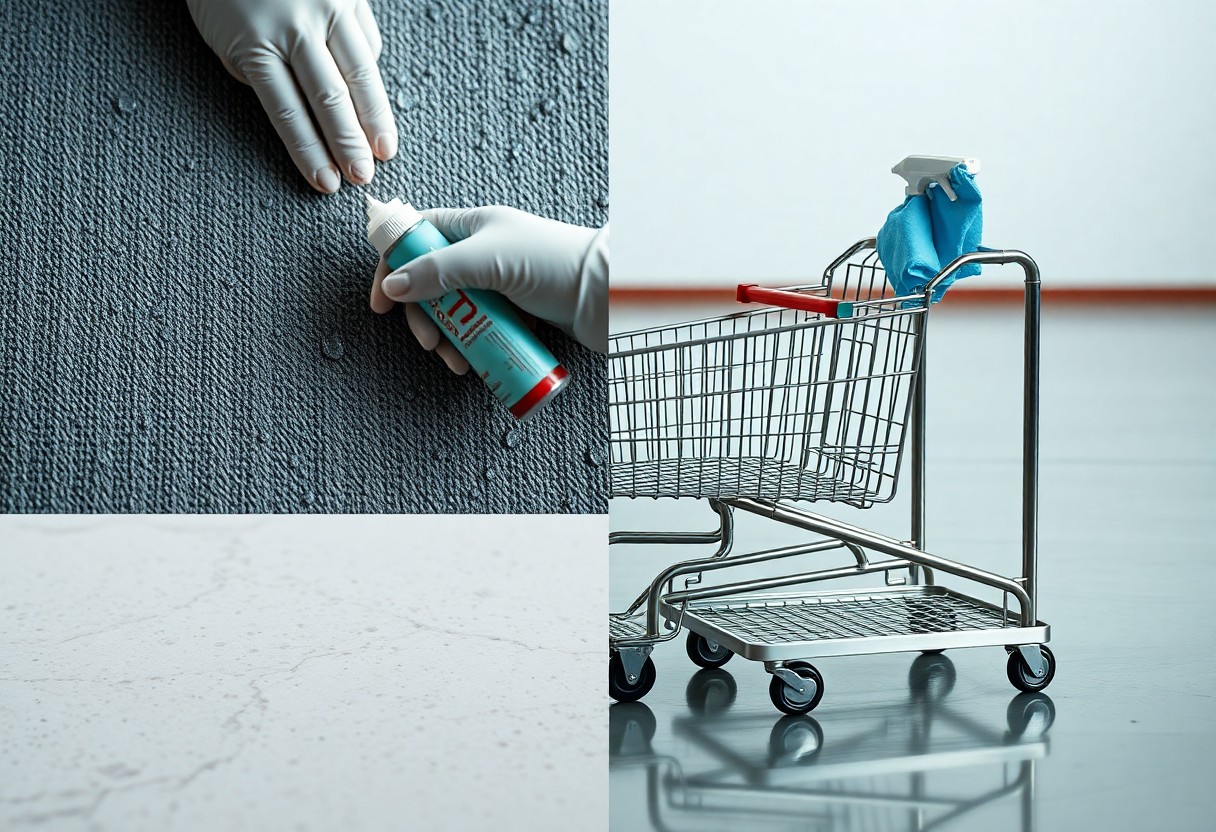
Dry-back vinyl gives you superior moisture resistance and easy sanitation, combining a non-porous surface and wear layer that resists spills, stains, and bacterial buildup for quick cleaning.
Waterproof Performance for Wet-Area Applications
You can install dry-back vinyl in bathrooms and kitchens because its waterproof core blocks moisture transfer, protecting subfloors and reducing maintenance needs.
Eliminating Gaps to Prevent Mold Growth
Seams are tightly bonded so you prevent gaps where mold can establish, helping you keep a hygienic floor without costly remediation.
Installation technique determines how well gaps are eliminated: when you apply full-spread adhesive, press and roll seams, and trim edges precisely, voids under the vinyl are minimized and moisture pockets can’t form; that containment lowers mold risk, speeds cleaning, and extends the life of both the floor and the substrate.
Economic Efficiency and Long-Term Value
Dry-back vinyl often costs less per square foot to buy and install than hardwood or tile, and its long warranty plus durable wear layer reduces replacement frequency, giving you superior long-term value.
Comparison of Material Costs vs. Click-Lock Systems
Comparing material and installation, dry-back vinyl typically requires fewer components and less on-site labor than click-lock systems, so you pay less upfront and face fewer installation delays that would increase your project costs.
Cost Comparison
| Dry-Back Vinyl | Click-Lock Systems |
|---|---|
| Lower material cost | Higher material cost |
| Adhesive installation | Floating installation with underlayment |
| Shorter install time | Longer acclimation and fit time |
| Less need for subfloor prep | More sensitive to subfloor variance |
Low-Cost Maintenance and Easy Plank Replacement
Cleaning dry-back vinyl requires only regular sweeping and occasional mopping, and if a plank is damaged you can replace small sections without full-floor removal, cutting your repair costs and downtime.
You can maintain the surface with pH-neutral cleaners and soft mops to protect the wear layer. For plank replacement, remove the damaged piece, apply the manufacturer-recommended adhesive, press the new plank into place, and roll to ensure adhesion, keeping repairs fast and inexpensive.
Creative Design Versatility
Design options in dry-back vinyl let you tailor floors to your exact taste, whether you want warm wood, cool stone, or bold graphics, and you get long-lasting finishes that suit high-traffic spaces you manage.
Authentic Textures and High-Definition Visuals
Textures are embossed to recreate wood grain, stone clefts, or grout lines so you feel authenticity underfoot, and high-definition printing ensures you get visuals that retain depth and clarity over time.
Unlimited Pattern Customization Options
Patterns can be fully customized for scale, repeat, and color so you match branding, open-plan layouts, or unique motifs, giving you control over flow and focal points across rooms.
You can specify precise pattern repeats, plank orientations, and register points to create continuous visuals or intentional breaks, add logos or custom motifs, and scale designs to room proportions; installers then cut and align sheets for mitered borders, inset designs, or directional effects, letting you achieve tailored commercial branding or distinctive residential looks.
Optimized Acoustic and Thermal Properties
Dry Back Vinyl reduces airborne and impact noise while improving thermal consistency, so you enjoy quieter, warmer rooms without extensive insulation or subfloor modification.
Sound Dampening Through Direct Contact
You benefit from direct-contact installation that minimizes gaps and vibration paths, reducing footfall and impact noise for noticeably calmer interiors.
Compatibility with Underfloor Heating Systems
Underfloor heating pairs well with Dry Back Vinyl because its thin construction transfers heat efficiently, letting you use lower water temperatures and quicker warm-up times.
Installation requires attention to surface temperature limits, adhesive compatibility, and board acclimatization: you should confirm the manufacturer’s maximum continuous surface temperature (typically 27-29°C), select adhesives rated for heated floors, and keep vinyl thickness and underlay thermal resistance low to preserve efficiency. Proper joint preparation and expansion gaps prevent buckling, and testing your system before finishing ensures reliable, long-term performance.
To wrap up
With this in mind you can choose dry back vinyl for lasting durability, easy maintenance, water resistance, cost-effectiveness, and design versatility, giving you a practical, long-lasting flooring solution that outperforms many alternatives.